When people ask Can You See VS2 Inclusions, they are usually asking a practical buying question, not a gemology question. They want to know whether a VS2 diamond will look clean to the naked eye, whether the inclusions will be obvious in everyday wear, and whether paying more for a higher clarity grade is actually worthwhile.
The short answer is that most VS2 diamonds are eye-clean in many real-world situations, but not all of them are. Whether you can see the inclusions depends on the diamond’s shape, size, color, cut, inclusion type, and where those inclusions are located. A well-cut VS2 can look very clean, while another VS2 may show a small dark crystal or a cloud under closer inspection.
For buyers of lab grown diamonds, this question matters even more because clarity grades can influence price, but the visual difference between VS2 and higher grades is often small. Understanding what is actually visible helps you avoid overpaying for a clarity grade that does not improve the way the diamond looks.
Quick Answer
Yes, you can sometimes see VS2 inclusions, but usually not from normal viewing distance in an eye-clean stone. Many VS2 diamonds look completely clean to the naked eye, especially when they are well cut and the inclusions are off to the side or small enough to blend in.
However, some VS2 diamonds do have inclusions that are visible under close inspection, especially if the inclusion is dark, large, centrally located, or positioned where light is handled in a way that draws attention to it. In other words, VS2 is not a guarantee of invisibility. It is a clarity range where the diamond may look clean, but you still need to inspect the stone or review images and reports carefully.
For many buyers, an eye-clean VS2 offers a strong balance of appearance and value. The key is not just the grade itself, but whether the diamond is actually eye-clean in the setting and viewing conditions you care about.
What VS2 Clarity Means
VS2 stands for Very Slightly Included 2. It is a clarity grade used by diamond grading labs such as GIA and IGI to describe a diamond with inclusions that are minor, but detectable under 10x magnification by a trained grader.
That last part matters. A clarity grade does not mean “visible without magnification” or “invisible to the eye.” It simply means the inclusions are present, and the lab considers them to fall within a particular range of size, number, relief, and position.
In practice, a VS2 diamond may contain small crystals, feathers, clouds, needles, pinpoints, or other internal characteristics. Some of these are harmless and invisible. Others may be easier to notice depending on the stone’s proportions and the viewer’s eyesight.
How VS2 Fits Into the Clarity Scale
It helps to understand where VS2 sits relative to other grades. Clarity grades generally move from flawless to included, with less visible inclusions as you move up the scale.
| Clarity Grade | General Meaning | Typical Buyer Experience |
|---|---|---|
| FL / IF | Flawless or internally flawless | Rare, usually more expensive, no visible inclusions |
| VVS1 / VVS2 | Very very slightly included | Inclusions are extremely difficult to see even under magnification |
| VS1 / VS2 | Very slightly included | Often eye-clean, but not guaranteed |
| SI1 / SI2 | Slightly included | May or may not be eye-clean, more variation between stones |
| I1 and below | Included | Inclusions are often visible without magnification |
VS2 is often considered a practical sweet spot because it can provide a clean appearance without the premium attached to VVS or higher clarity grades.
Can You Actually See VS2 Inclusions?
The most useful answer is this: sometimes yes, often no, and it depends on the diamond. A VS2 grade does not automatically mean visible flaws. Many VS2 diamonds are perfectly eye-clean in normal use.
“Eye-clean” means you cannot see inclusions with the unaided eye in normal viewing conditions. That usually means looking at the diamond from a normal distance, not using a loupe, and not holding it inches from your face under strong lighting.
When shoppers ask whether they can see VS2 inclusions, they often imagine a worst-case scenario. In reality, many inclusions in VS2 diamonds are only visible under magnification or when the stone is examined closely. Others may be visible only if you know exactly where to look.
What Counts as Normal Viewing?
Normal viewing usually means looking at the diamond at arm’s length, or when it is worn in a ring under typical indoor or outdoor lighting. Most people do not inspect a diamond under a microscope during daily wear.
That is why a diamond can technically have inclusions and still look clean in a ring. The practical question is not whether the inclusions exist. It is whether they change the way the diamond looks to the average person.
When VS2 Inclusions Become Easier to Notice
VS2 inclusions are more likely to be visible when:
- The inclusion is dark and contrasts strongly with the diamond.
- The inclusion is large or centrally located.
- The diamond is larger, which can make details easier to spot.
- The cut allows more direct viewing through the stone.
- The viewer has very sharp eyesight and is looking closely.
- The stone is being examined under strong lighting or magnification.
By contrast, small white or transparent inclusions near the edge of the stone are often difficult to notice. This is why the type and location of the inclusion matter as much as the grade itself.
Why Clarity Matters to Buyers
Clarity matters because it can influence three things buyers care about: appearance, value, and peace of mind. A diamond may have excellent color and cut, but if the inclusions are obvious, that can affect how polished and attractive the stone looks.
At the same time, clarity is often overemphasized by shoppers who are still learning how to buy diamonds. In many cases, a higher clarity grade does not create a meaningful visual difference once the diamond is in a ring and viewed at normal distance.
That is especially true with lab grown diamonds, where buyers often have more flexibility in their budget. Instead of paying more for a VVS grade that looks no different in daily wear, many buyers get better overall value by focusing on cut quality and choosing an eye-clean VS2 or SI1.
Appearance
Clarity affects whether the diamond looks clean or distracting. Inclusions that are tiny and hard to see usually do not matter much. Inclusions that are dark, cloudy, or obvious under normal viewing can reduce visual appeal.
A diamond with excellent cut can also hide minor inclusions better because sparkle helps mask small imperfections. This is one reason cut quality and clarity should be considered together rather than separately. For more context, it helps to understand how diamond cut affects brilliance and visual performance.
Value
Clarity grades often create price differences that are larger than the visible difference justifies. A buyer may pay a premium for VVS1 or VVS2, but see little or no improvement in everyday appearance compared with a well-chosen VS2.
This is where practical value comes in. If the goal is a beautiful diamond that looks clean in normal wear, paying more for invisible clarity may not be the best use of the budget.
Confidence
Many buyers simply feel better knowing a stone looks clean to their eye. That confidence matters, especially for an engagement ring or a piece of jewelry that will be worn frequently.
For that reason, the best clarity grade is not always the highest one. It is the grade that gives you the look you want at a price that makes sense.
How VS2 Inclusions Affect Appearance
The appearance of VS2 inclusions depends on what the inclusion is, where it sits, and how the diamond is cut. Two VS2 diamonds can look very different in person.
One may have a tiny white crystal near the edge and look perfectly clean. Another may have a dark crystal under the table, the large flat top area of the diamond, and be easier to notice in certain lighting.
Inclusion Location Matters
Location is one of the most important factors in whether you can see VS2 inclusions. An inclusion near the center of the stone is usually more noticeable than one near the edge, because the center is where the eye naturally looks first.
Inclusions near the girdle, the outer edge of the diamond, may be hidden once the stone is set, depending on the ring style. This is one reason buyers should not judge clarity by grade alone.
Inclusion Type Matters
Some inclusions blend in better than others. A small white pinpoint may be far less noticeable than a dark crystal. A feather may be invisible unless it reaches the surface or catches the light in a particular way.
Clouds can be tricky because they may not appear as a single obvious spot. Instead, a cluster of very tiny inclusions may create a hazy area that softens transparency. In some stones, that haze is subtle. In others, it can affect the crispness of the diamond’s appearance.
Cut Quality Influences What You See
A well-cut diamond returns more light to the eye, and that sparkle can help mask minor inclusions. Poorly cut stones may make inclusions easier to notice because the diamond looks less lively overall.
For buyers comparing lab grown diamonds, this is especially important. A beautifully cut VS2 can look better than a poorly cut higher-clarity diamond because brilliance has a bigger impact on first impressions than tiny internal features.
Common VS2 Inclusion Types and What They Mean
Understanding the most common inclusion types helps you judge whether a VS2 diamond is likely to be eye-clean. These inclusion names can sound technical, but the practical question is simple: do they affect what you can see, or how the stone performs?
Crystal
A crystal is a small mineral crystal trapped inside the diamond. It may be white, clear, gray, or dark. A clear or white crystal is often less noticeable than a dark one.
Visibility: Usually small, but dark crystals can be easier to spot.
Durability: Usually not a concern unless the crystal is associated with a surface-reaching feature.
Buyer concern: Moderate, depending on size and location.
Feather
A feather is a small internal fracture that often looks like a wispy line or shape. The word sounds more serious than it often is. Many feathers are harmless and stable, especially when they are not near the edge of the stone.
Visibility: Often subtle, but can reflect light and become easier to notice.
Durability: Usually not a problem unless it reaches the surface in a vulnerable area.
Buyer concern: Low to moderate, depending on placement.
Cloud
A cloud is a group of tiny pinpoints so close together that they create a hazy area. Clouds can be very minor, or in some cases they can affect transparency.
Visibility: May be invisible as a distinct feature, but can create a hazy look.
Durability: Usually not a durability issue.
Buyer concern: Moderate if the cloud affects transparency.
Needle
A needle is a long, thin inclusion that looks like a tiny line. Needles are often difficult to see unless they are grouped together or placed in a very visible area.
Visibility: Often minimal.
Durability: Usually not a concern.
Buyer concern: Generally low.
Pinpoint
A pinpoint is a tiny dot-like inclusion. A single pinpoint is usually harmless and invisible to most buyers. A cluster of pinpoints may be more noticeable.
Visibility: Usually low.
Durability: Not typically a concern.
Buyer concern: Low in most cases.
Twinning Wisp
A twinning wisp is a line or pattern inside the diamond caused during crystal growth. These are more common in some lab grown diamonds and can range from invisible to visible depending on density and arrangement.
Visibility: Variable, sometimes subtle, sometimes noticeable under close viewing.
Durability: Usually not an issue by itself.
Buyer concern: Depends on whether it creates haze or visible patterning.
Knot
A knot is a crystal that reaches the surface of the diamond. It can sometimes appear as a raised or visible point.
Visibility: Can be noticeable if exposed.
Durability: More concern than with internal inclusions because it reaches the surface.
Buyer concern: Moderate to high depending on size and location.
Cavity
A cavity is a small opening or indentation in the diamond’s surface, often where an inclusion broke out during cutting or polishing.
Visibility: Often visible under close inspection.
Durability: Can be a concern because it is a surface feature.
Buyer concern: Usually worth reviewing carefully.
Chip
A chip is a small piece missing from the diamond’s surface. This is different from a tiny internal inclusion. Chips are a durability and appearance concern because they are surface damage.
Visibility: Often visible if not tiny.
Durability: Yes, because it involves the surface.
Buyer concern: High unless repaired or insignificant.
What Eye-Clean Really Means for VS2 Diamonds
Eye-clean is one of the most important concepts in clarity shopping, but it is also one of the least standardized. Different people may define it slightly differently.
Some jewelers mean the diamond is eye-clean from a normal viewing distance in everyday conditions. Others may mean no inclusions are visible even when the stone is held closer. Because of this, it is important to ask how a seller defines eye-clean before making a decision.
For most buyers, a practical definition is best: if the diamond looks clean when worn on the hand, under typical lighting, without magnification, it is eye-clean enough for everyday use.
Why Some VS2 Diamonds Are Eye-Clean
VS2 inclusions are often small enough or subtle enough to disappear in normal viewing. Sparkle, movement, and the size of the diamond all influence what you notice.
Many shoppers are surprised to learn that a diamond can be graded with inclusions and still look visibly clean. This is normal. The grading scale is not the same thing as a beauty scale.
Why Some VS2 Diamonds Are Not Eye-Clean
Not every VS2 is equally clean. A larger stone, an inclusion under the center, or a dark crystal can make a VS2 easier to notice. Certain shapes may also reveal inclusions more readily because of their facet patterns and viewing angles.
This is why it is a mistake to buy based only on the grade label. The report is helpful, but it does not replace careful review.
How Shape Affects Visibility of VS2 Inclusions
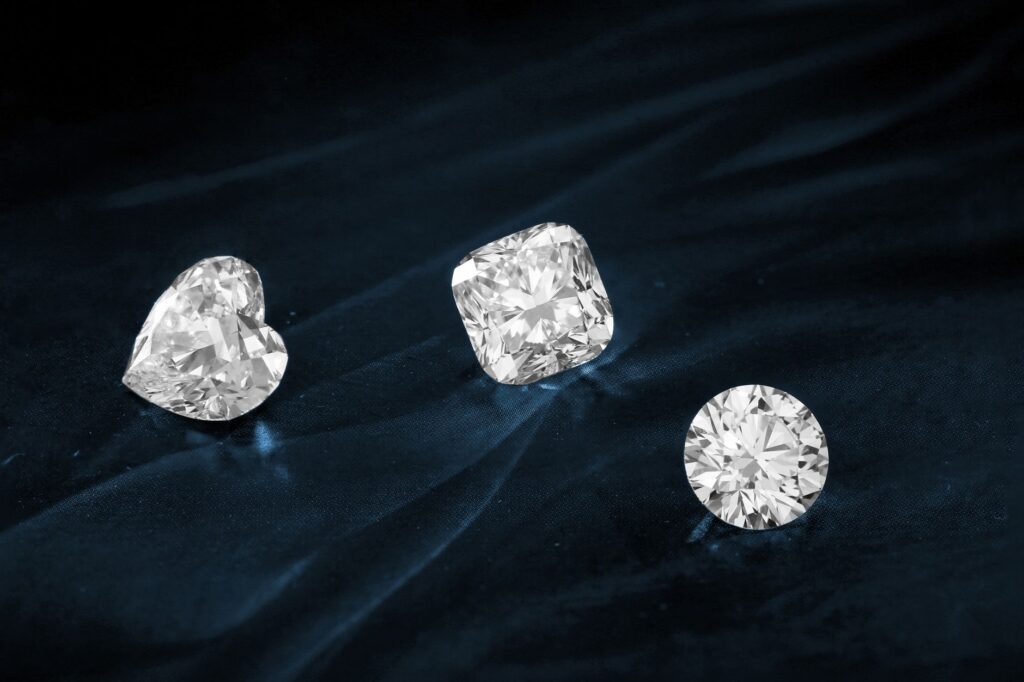
Diamond shape influences how easy it is to see inclusions. Some shapes naturally hide clarity characteristics better than others. Others tend to show them more easily because of their facet structure.
| Shape | General Clarity Behavior | Practical Note |
|---|---|---|
| Round | Often hides inclusions well | Many VS2 rounds are eye-clean |
| Oval | Can show inclusions near the center more easily | Bow-tie area and length can draw attention |
| Emerald | Step cuts can reveal inclusions more readily | Often benefits from higher clarity |
| Princess | Moderate to good hiding ability | Points can conceal small inclusions |
| Radiant | Often good at masking inclusions | Brilliance can help hide minor flaws |
| Pear and Marquise | Can vary widely | Tips and length can affect visibility |
Round brilliant diamonds usually hide inclusions better than step-cut shapes such as emerald or Asscher cuts. That is because rounds have more brilliance and sparkle, which helps distract the eye from small internal features.
Step cuts have larger, open facets that act more like windows. If inclusions are present, they may be easier to notice. This does not mean you must avoid VS2 in every step-cut diamond, but it does mean you should inspect the specific stone more carefully.
How Lab Grown Diamonds Change the Clarity Conversation
Lab grown diamonds often have excellent clarity for the price, but they are not identical to natural diamonds in how inclusions form. Their growth process can create patterns such as graining, clouds, or twinning wisps that may be different from the inclusions seen in mined stones.
For buyers, the main question is still the same: can you see anything that affects the appearance? A lab grown VS2 may be perfectly eye-clean, but another may show features that are easier to notice under magnification or strong lighting.
Because lab grown diamonds are usually less expensive than natural diamonds of similar size and quality, some buyers choose to move up in clarity more easily. That can make sense in some cases, but it is not always necessary for appearance. Understanding lab grown diamonds in the context of clarity helps buyers spend money where it matters most.
Are VS2 Inclusions More Noticeable in Lab Grown Diamonds?
Not inherently. VS2 is still a clarity grade, and the same broad principles apply. The actual visibility depends on the individual stone.
What is more common in lab grown diamonds is variation in inclusion style. Some stones show tiny pinpoint-type features or growth patterns that do not create an obvious visual issue. Others may have clouds or internal graining that require more attention.
Should Lab Grown Buyers Always Aim for Higher Clarity?
No. Many lab grown buyers can choose an eye-clean VS2 and allocate budget toward better cut, size, or setting quality. In many cases, that gives a better overall result than paying extra for a clarity grade that does not improve what you see.
That said, some shoppers do prefer cleaner grading reports for personal comfort. If the price difference is small, moving up to VS1 or VVS can be reasonable. The key is to recognize when you are paying for measurable appearance and when you are paying mostly for the label.
VS2 Versus Other Clarity Grades in Real Life
Comparing VS2 to nearby grades is often more useful than looking at the grade in isolation. Buyers usually want to know whether the visible difference is worth the price difference.
VS2 vs VS1
VS1 is generally a slightly cleaner grade than VS2, but the visual difference is often subtle. Many people cannot tell the difference without magnification, especially if both stones are eye-clean.
For most buyers, the upgrade from VS2 to VS1 makes sense only if the VS2 has a noticeable inclusion or if the price gap is small.
VS2 vs VVS2
VVS2 usually has even smaller inclusions than VS2, but these are commonly invisible in everyday viewing. The premium often buys peace of mind more than an obvious visual improvement.
For buyers focused on value, a good VS2 often makes more sense than paying extra for VVS2 unless the buyer strongly prefers a higher grade on paper.
VS2 vs SI1
SI1 is where the clarity conversation becomes more stone-specific. Some SI1 diamonds are eye-clean and offer excellent value. Others show visible inclusions and may not satisfy buyers who want a clean look.
Compared with SI1, VS2 offers a more consistent chance of eye-clean appearance. If you want fewer surprises, VS2 is often the safer choice.
VS2 vs SI2
SI2 stones are much more likely to have visible inclusions. Some can still look good, especially if the inclusions are small and well placed, but the variation is greater.
If a buyer wants the simplest path to a clean-looking diamond, VS2 is generally easier to shop than SI2. This is one reason many experienced buyers settle in the VS2 to SI1 range rather than stretching for VVS clarity or risking a lower grade without careful review.
Practical Buyer Scenarios
Real buying decisions are usually easier to understand through examples. These scenarios reflect what buyers and jewelers commonly see when comparing diamonds in person.
Scenario 1: VS2 Versus SI1 in Normal Viewing Conditions
Imagine two diamonds with similar cut, color, and size. One is VS2 with a tiny crystal near the edge. The other is SI1 with a slightly larger inclusion under the table.
Even if both are technically acceptable on paper, the VS2 may look cleaner to the eye. The SI1 could still be a good buy if it is eye-clean, but it carries more risk of visible inclusion. This is why shoppers often prefer to see actual photos or videos rather than rely on grade alone.
Scenario 2: Eye-Clean SI1 Versus Non-Eye-Clean SI1
Two SI1 diamonds can have very different visual outcomes. One may be perfectly eye-clean and represent excellent value. Another may show a black crystal or a cloud that is easy to spot.
This comparison shows why buyers should not assume all SI1 stones are the same. The same is true, to a lesser degree, for VS2.
Scenario 3: VVS Versus VS for Everyday Wear
In many everyday settings, a VVS diamond will not look meaningfully different from a good VS2. Both may appear clean once set in a ring and viewed casually.
The main difference is often psychological and financial. Some buyers like the assurance of VVS clarity. Others would rather avoid the premium and put that money toward a better cut, larger carat size, or a more refined setting.
Advantages of Choosing VS2
VS2 offers several practical advantages for buyers who want a clean appearance without overpaying for ultra-high clarity.
- Often eye-clean: Many VS2 diamonds look clean to the naked eye in everyday use.
- Better value than VVS grades: The price premium for VVS may not deliver a visible improvement.
- More forgiving than SI1: VS2 usually gives a higher level of consistency than lower clarity grades.
- Good balance for lab grown diamonds: A strong option when budget is being allocated across size, cut, and setting.
- Suitable for many ring styles: Works well in a wide range of settings if the stone is eye-clean.
For many buyers, VS2 hits a practical middle ground. It avoids the cost of top-tier clarity while still offering a strong chance of a pleasing, clean appearance.
Disadvantages and Trade-Offs of VS2
VS2 is not the right choice in every situation. There are a few important limitations to understand before you buy.
- Not all VS2 stones are eye-clean: Some do show visible inclusions.
- Variation is significant: Two diamonds with the same grade can look very different.
- Higher scrutiny may reveal inclusions: Closer inspection, strong lighting, or magnification can bring them out.
- Some shapes need more caution: Step cuts and elongated shapes may show inclusions more easily.
- Grade alone is not enough: You still need to review the actual stone and report.
These trade-offs do not make VS2 a bad choice. They simply mean that the buyer should check the specific diamond instead of assuming the grade guarantees a perfect appearance.
What Experienced Buyers Look At Beyond the Grade
Experienced diamond shoppers do not stop at the clarity label. They look at the full picture because that is how you assess real-world appearance and value.
1. Inclusion Type
A small white pinpoint is usually less concerning than a dark crystal or a surface-reaching feather. The exact inclusion type helps determine whether the stone will look clean and whether there may be any durability concerns.
2. Inclusion Location
An inclusion on the edge may be less noticeable than one in the middle of the diamond. This matters especially for solitaires and styles with open visibility.
3. Cut Quality
A diamond with strong cut quality can mask minor inclusions more effectively. Light return, contrast, and sparkle all influence what the eye notices first.
4. Size and Shape
Larger stones and some fancy shapes make inclusions easier to detect. A VS2 in a 1-carat round may be easier to evaluate than a VS2 in a 3-carat emerald cut, for example.
5. Certification Details
The grading report is essential, but it should be read with care. If you are comparing stones, it helps to understand diamond certifications and how labs describe clarity characteristics. If the report includes a plotted map, use it to locate where the inclusions sit inside the stone.
Common Buyer Mistakes
Clarity shopping can become confusing quickly. These are some of the most common mistakes buyers make when judging VS2 diamonds.
Overpaying for Invisible Improvements
One of the biggest mistakes is paying significantly more for VVS clarity when the VS2 already looks clean. The improvement may exist on paper, but not in a way you can see during normal wear.
Ignoring Inclusion Location
Many buyers focus on the grade and ignore where the inclusion is placed. A small inclusion in an obvious spot can be more noticeable than a slightly larger one hidden near the edge.
Assuming All VS2 Diamonds Look the Same
They do not. One VS2 may be nearly impossible to spot inclusions in, while another may have something visible with careful viewing. The report tells you the category, not the whole story.
Confusing Eye-Clean With Flawless
Eye-clean does not mean flawless. It simply means the inclusions are not visible to the naked eye under normal conditions. That is often enough for buyers who care about appearance rather than perfection under magnification.
Ignoring the Role of Cut
A poorly cut diamond can make inclusions more obvious and reduce sparkle. Buyers sometimes chase clarity grades when they should be paying more attention to cut, which usually has a larger impact on what the diamond looks like in daily wear.
Assuming Higher Clarity Is Always Better Value
Higher clarity is not always a better use of money. If the stone is already eye-clean, the extra cost may not improve appearance. It may only improve the grade on the certificate.
How to Evaluate a VS2 Diamond Before Buying
If you are shopping online or in person, a few simple steps can help you determine whether a VS2 stone is likely to satisfy you.
Review High-Resolution Images or Video
Look for close-up images and videos that show the diamond from multiple angles. Pay attention to whether anything stands out when the stone is moved under light.
Check the Inclusion Plot
The clarity plot on the certificate shows the general location and type of inclusions. This can tell you whether the issue is centered, near the edge, or spread throughout the stone.
Ask Whether the Stone Is Eye-Clean
If buying from a jeweler, ask how they define eye-clean. Better yet, ask them to describe the viewing distance and lighting conditions they used.
Consider the Shape and Size
Be more careful with larger stones and open shapes like emerald cuts. These styles tend to reveal clarity more easily.
Balance Clarity Against the Rest of the Diamond
Do not let clarity crowd out other important factors. Cut, color, and carat weight all affect the diamond’s appearance. Many buyers get a better overall result by making a modest clarity trade-off and improving cut or proportion instead.
Does VS2 Affect Durability?
Usually, VS2 inclusions do not affect durability in a meaningful way. Most VS2 features are internal and small enough that they do not threaten the stone’s structure.
The main exception is when the inclusion is surface-reaching, such as a feather near the edge, a knot, cavity, or chip. These features deserve more attention because they can be more vulnerable to wear or impact.
For most buyers, durability concerns are secondary to appearance when choosing VS2. The more important question is whether the stone looks clean and whether the inclusion is placed safely.
How Much Clarity Do You Really Need?
That depends on your priorities. If you want the safest path to a clean look, VS2 is often a strong choice. If you are comfortable examining stones carefully, a well-chosen SI1 may save money. If you strongly prefer a cleaner grading report, VS1 or VVS may give you that comfort, though not necessarily a visible improvement.
For many buyers, the most practical range is VS2 to SI1, provided the stone is eye-clean. That range often offers the best combination of appearance and value. In lab grown diamonds especially, this can leave room to prioritize a better cut or larger size without sacrificing what the diamond looks like on the hand.
Frequently Asked Questions
Can you see VS2 inclusions without a loupe?
Sometimes, but not always. Many VS2 diamonds are eye-clean and show no visible inclusions without magnification. Others may have inclusions that can be seen if they are dark, central, or under strong lighting.
Is VS2 good enough for an engagement ring?
Yes, often it is. Many engagement ring buyers choose VS2 because it offers a strong balance of appearance and value. The important part is whether the specific diamond looks clean to your eye and suits the shape you want.
Is VS2 better than SI1?
In general, VS2 is a safer choice if you want fewer surprises. But a well-chosen SI1 can look just as clean and may cost less. The better value depends on the individual stone, not just the grade.
Is VS2 overkill for lab grown diamonds?
Not necessarily. It depends on the price difference and your comfort level. Some lab grown buyers are happy with VS2 because it often looks clean and avoids the variability of lower grades. Others may find that eye-clean SI1 offers better value.
Will a VS2 look different from VVS in a ring?
Usually not in normal wear. The difference may exist under magnification, but many people will not notice it on the hand. This is why many buyers focus on eye-clean appearance rather than chasing the highest clarity grade.
Do VS2 inclusions show more in larger diamonds?
They can. As a diamond gets larger, inclusions may become easier to notice because there is more surface area and the eye has more room to examine the stone. This is one reason larger diamonds deserve closer inspection, even at the same clarity grade.
Should I avoid VS2 if I want the cleanest possible look?
Not automatically. A well-chosen VS2 can look very clean. If you want maximum confidence, review the actual stone rather than rejecting the grade outright.
What is the safest way to buy a VS2 diamond online?
Look for high-quality images or videos, review the clarity plot, and confirm whether the diamond is eye-clean. If you are unsure, ask the seller where the inclusion sits and whether it is visible at normal viewing distance.
Conclusion
The answer to Can You See VS2 Inclusions is that sometimes you can, but many VS2 diamonds are still eye-clean in everyday use. The real issue is not the grade label alone. It is whether the actual diamond looks clean, whether the inclusion is noticeable, and whether the price reflects the visual difference.
For many buyers, VS2 offers a strong balance of appearance, practicality, and value. It often avoids the visible risks of lower clarity grades without requiring the premium of VVS. That makes it a useful starting point, especially when combined with careful attention to cut, shape, inclusion location, and certification details.
If you are comparing diamonds, focus on what you can actually see in normal conditions. That approach leads to more confident decisions and helps you spend your budget where it has the greatest impact on the diamond’s appearance.