Clarity grades can look more important on a grading report than they do in a ring. That is especially true when comparing VVS1 vs VS1 diamonds, because both grades are high enough that most buyers will never notice a visible difference once the stone is set and worn.
The real question is not which grade sounds better. It is whether the extra money for VVS1 creates a meaningful improvement in appearance, or whether a carefully chosen VS1 already gives you the same clean look for less. For many shoppers, especially those comparing lab grown diamonds, the answer depends on eye-clean appearance, inclusion type, diamond shape, and how the stone will actually be viewed day to day.
This guide explains the practical difference between VVS1 and VS1 clarity, what buyers can realistically see, how these grades affect price and value, and when it makes sense to pay for the higher grade. It also covers how clarity behaves in lab grown diamonds, where very high clarity is common and the visual difference between grades is often smaller than the price difference suggests.
Quick Answer
VVS1 vs VS1 diamonds are both very high-clarity diamonds, and in most real-world situations they look extremely similar to the naked eye. VVS1 means “very, very slightly included 1,” while VS1 means “very slightly included 1.” The difference is that VVS1 has even smaller or harder-to-find inclusions than VS1, but both grades are usually eye-clean in normal viewing conditions.
For most buyers, a well-chosen VS1 diamond is usually the more practical purchase. It often looks just as clean as VVS1, but costs less. VVS1 may be worth the premium if you want a higher clarity grade on paper, are shopping for a larger stone, or prefer the reassurance of a cleaner report.
In other words, this comparison is usually about value and peace of mind, not obvious appearance. If you are buying a natural diamond or a lab grown diamond, cut quality, color, and the setting often affect how the diamond looks more than the jump from VS1 to VVS1.
Understanding VVS1 and VS1 Clarity
What diamond clarity means
Diamond clarity describes how many internal characteristics, called inclusions, and surface features, called blemishes, are present in a diamond. These may form naturally as the diamond grows or, in the case of lab grown diamonds, during the growth and cutting process. Clarity grading is based on how easy these features are to see under magnification.
The Gemological Institute of America, or GIA, uses a clarity scale that runs from Flawless to Included. VVS1 and VS1 both sit near the top of that scale. That means the diamond has only very minor features that are difficult to detect even for trained graders using 10x magnification.
What VVS1 means
VVS1 stands for Very Very Slightly Included 1. In simple terms, the inclusions are extremely difficult to see under magnification. They are usually tiny enough that the diamond still appears very clean to the naked eye.
VVS1 is considered a premium clarity grade. Buyers often see it as a near-top clarity level because it is close to flawless in appearance and tends to have only minute, hard-to-find internal features.
What VS1 means
VS1 stands for Very Slightly Included 1. This is still a very high clarity grade, but the inclusions are somewhat easier to locate under magnification than in VVS1. That does not mean they are easy to see without tools. In many cases, a VS1 diamond still looks clean to the eye.
VS1 is often considered one of the best value clarity grades because it combines a clean appearance with a lower price than VVS1. Many experienced buyers consider it a practical sweet spot, especially when the stone has a strong cut and the inclusions are not in a noticeable position.
The key difference between VVS1 and VS1
The key difference is not that one looks clean and the other does not. The difference is usually how difficult the inclusions are to detect under magnification and how much extra you pay for that rarity. In everyday viewing, both grades often appear the same.
| Clarity Grade | Meaning | Typical Naked-Eye Appearance | Value Consideration |
|---|---|---|---|
| VVS1 | Very very slightly included | Usually eye-clean | Higher price for a cleaner report |
| VS1 | Very slightly included | Usually eye-clean | Often better value for most buyers |
Why Clarity Matters to Buyers
Appearance is the main reason
Most shoppers care about clarity because they want a diamond that looks clean and attractive. That matters most when an inclusion is large enough, dark enough, or poorly placed enough to be seen without magnification. If the inclusion cannot be seen in normal wear, its practical impact is limited.
That is why many buyers focus on whether a diamond is eye-clean. Eye-clean means no obvious inclusions are visible to the naked eye at a normal viewing distance. This depends not only on the clarity grade, but also on inclusion type, placement, diamond shape, and lighting.
Clarity affects value, not just appearance
Clarity also affects price. Higher clarity grades cost more, even when the visual difference is minimal. That means some of the money spent on VVS1 is often paying for rarity and grading prestige rather than a noticeable improvement in appearance.
For buyers trying to maximize value, that matters. If two diamonds look equally clean to the eye, the one with the lower clarity grade may be the better use of budget, especially if the savings can go toward a better cut or larger carat weight.
Clarity can matter more in some settings
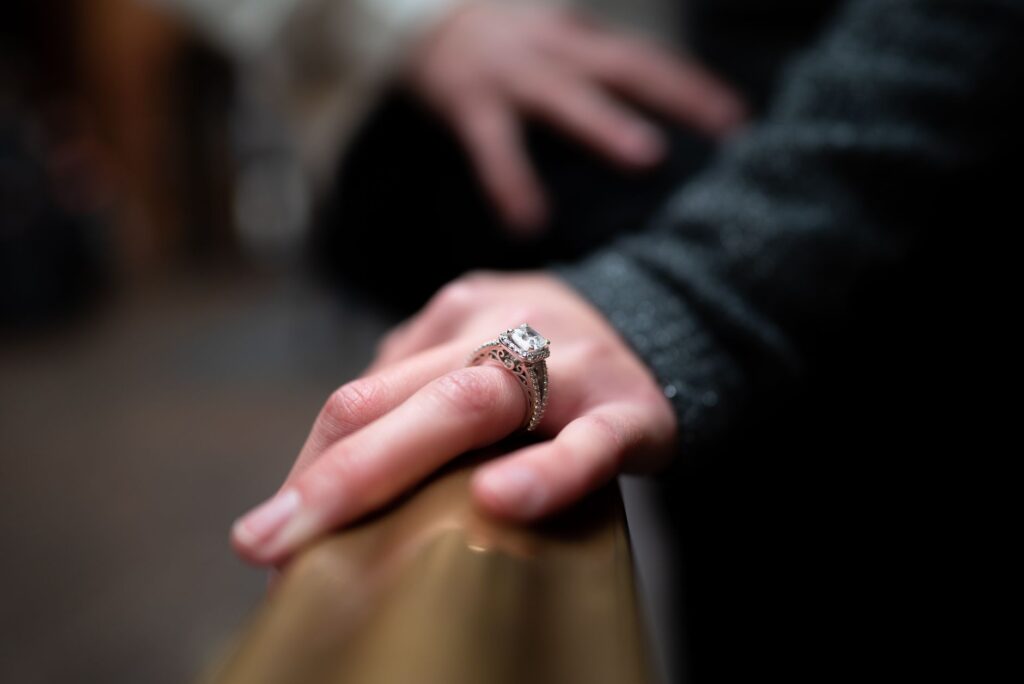
Some ring designs make inclusions easier to notice. A solitaire with an open setting can show more of the diamond from the side. Halo settings and certain prong arrangements may hide minor features, while step cuts like emerald cuts tend to reveal clarity differences more easily than brilliant cuts.
That is one reason it is not enough to look only at the letter grade. The shape and setting influence whether clarity is practically important.
How VVS1 and VS1 Look in Real Life
What most buyers actually see
In normal daily wear, most people cannot tell a VVS1 from a VS1 diamond by eye. Both are usually clean-looking, especially once set in jewelry and viewed from a natural distance. Even many trained jewelers need magnification to identify the difference quickly.
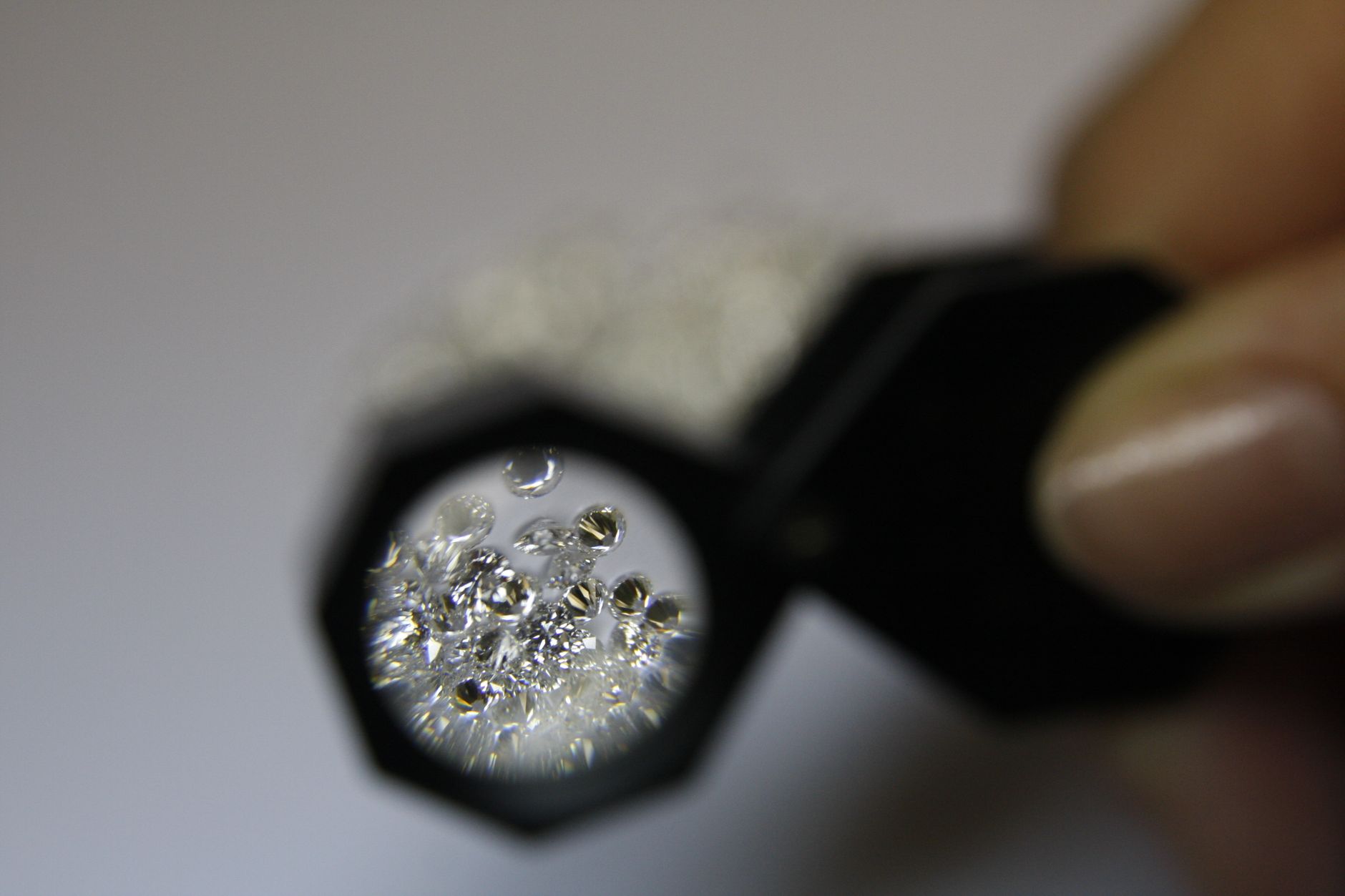
Under a loupe or microscope, the difference becomes more meaningful. A VVS1 diamond will have inclusions that are harder to find, while a VS1 may show tiny features a little more readily. But those differences are generally not visible during casual wear or even at arm’s length in ordinary lighting.
Why cut matters as much as clarity
A diamond with excellent cut will often hide minor inclusions better because it returns more light and shows stronger sparkle. Sparkle can distract the eye from small imperfections, which is why a well-cut VS1 can often look more appealing than a poorly cut VVS1.
This matters even more in lab grown diamonds, where buyers may see a wide range of clarity grades and assume the higher number is the better choice. In practice, cut quality usually has a bigger impact on beauty than moving from VS1 to VVS1.
Color and shape can influence perception
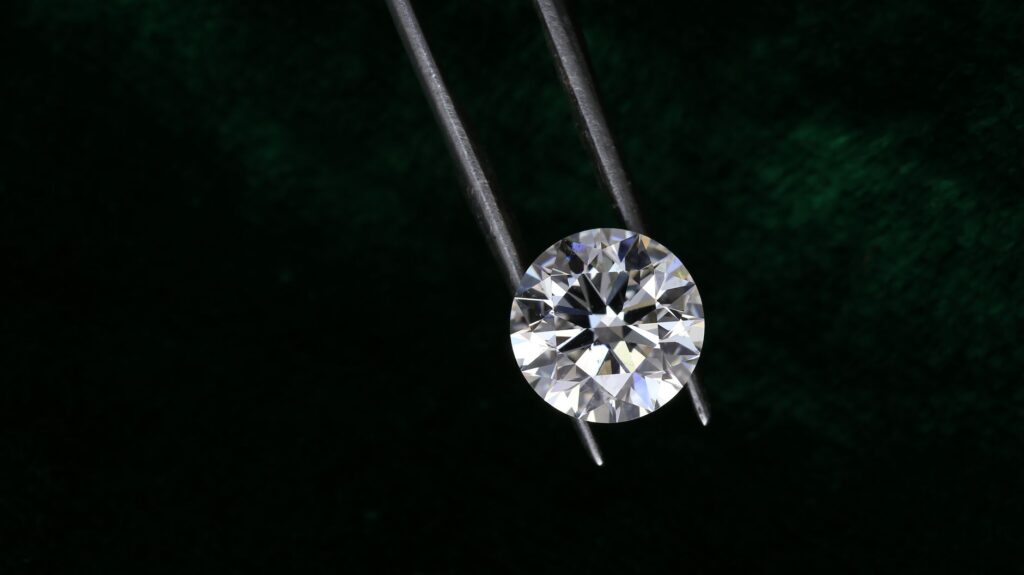
Near-colorless and colorless diamonds may make certain inclusions easier or harder to notice depending on their type. Shapes such as emerald, Asscher, and oval can also reveal clarity differently. Brilliant cuts, such as round brilliant and cushion brilliant, tend to disguise small inclusions better because of their facet pattern.
If you are comparing VVS1 vs VS1 diamonds, shape matters almost as much as the grade itself. A VS1 round brilliant with a tiny edge inclusion may appear cleaner than a VVS1 emerald cut with a more centrally located feature.
Common Inclusion Types and What They Mean
Crystal
A crystal is a tiny mineral particle trapped inside the diamond. It may reflect light and sometimes be visible under magnification. In VVS1 and VS1 diamonds, crystals are usually small and unlikely to be noticed without tools unless they are dark or centrally located.
Most crystal inclusions do not affect durability unless they are large, near a vulnerable area, or combined with other features. For most buyers, a small crystal is a normal clarity characteristic rather than a reason to avoid the diamond.
Feather
A feather is a small internal fracture that can look like a white, wispy line. Many feathers are harmless and stable, but their position matters. A feather near the edge, especially close to a prong or thin area, deserves more attention than a tiny feather deep inside the stone.
In VVS1 and VS1 diamonds, feathers are usually minor. Still, buyers should ask whether the feather affects durability, particularly in rings worn every day.
Cloud
A cloud is a group of many tiny pinpoint inclusions that may appear as a hazy area under magnification. A small cloud often has no effect on appearance. However, if a cloud is dense enough, it can reduce transparency and make the diamond look slightly less lively.
Most VVS1 and VS1 clouds are not a major concern, but if the grading report mentions a large cloud or a cloud that affects clarity appearance, it is worth reviewing the diamond in person or through detailed imagery.
Needle
A needle is a very thin, elongated inclusion. It is usually very small and often only visible under magnification. Needles rarely affect durability unless they are associated with a structural issue or concentrated in a sensitive area.
Needles are common enough that they should not automatically worry buyers. In higher clarity grades, they are often just part of the diamond’s internal fingerprint.
Pinpoint
A pinpoint is a tiny dot-like inclusion. On its own, a pinpoint is usually insignificant. Many diamonds have a few pinpoints, and they are often one of the least concerning inclusion types from a visual standpoint.
When a diamond has many pinpoints grouped together, they may create a cloud-like look, but single pinpoints in VVS1 and VS1 stones are typically not visible in day-to-day use.
Twinning wisp
A twinning wisp is a fine internal pattern formed during crystal growth, often seen in lab grown diamonds. It can appear as faint wispy lines or streaks under magnification. In many cases, twinning wisps are not visible to the naked eye and do not affect performance.
Because lab grown diamonds are commonly evaluated with high clarity grades, twinning wisps are one of the inclusion types buyers may see on a report without it meaning the stone will look flawed.
Knot, cavity, and chip
A knot is a small crystal that reaches the surface. A cavity is a tiny opening in the diamond, and a chip is a small break at the surface. These are more concerning than many internal inclusions because they can affect durability or be more visible.
They are less common in top clarity grades like VVS1 and VS1, but if they appear, buyers should review their location carefully. Surface-reaching features deserve more attention than small internal marks because they can be more vulnerable to wear.
Eye-Clean Appearance: The Real Buyer Question
What eye-clean means
Eye-clean means the diamond does not show obvious inclusions to the unaided eye when viewed in normal conditions. That usually means looking at the diamond from a typical distance, not inspecting it from a few inches away under bright magnification.
Eye-clean is one of the most practical standards for buyers because it reflects what most people actually experience. A diamond can be technically included and still look perfectly clean in a ring.
Why VVS1 and VS1 are usually eye-clean
Both VVS1 and VS1 sit high enough on the clarity scale that their inclusions are generally difficult to see without magnification. For that reason, they are usually eye-clean in most shapes and sizes. The main exception is when an inclusion is unusually dark, centrally located, or paired with a larger carat size and a shape that reveals more detail.
In practical terms, many buyers compare VVS1 and VS1 and cannot spot any difference in a store or online image. That is normal. The visible difference is often too small to matter unless the diamond has unusual inclusion placement.
What can make an eye-clean diamond look less clean
Even a high-clarity diamond can look less perfect if the inclusion is black, reflective, or placed near the center table. In contrast, a tiny white inclusion near the edge may be almost impossible to spot. This is why inclusion type and placement matter as much as the grade itself.
Lighting also changes perception. Bright jewelry-store lights can make a diamond seem cleaner than it will appear in softer indoor or daylight conditions. Buyers should try to evaluate the stone under more than one lighting situation whenever possible.
VVS1 vs VS1 in Lab Grown Diamonds
Why the comparison matters even more with lab grown stones
Lab grown diamonds often offer higher clarity at lower prices than natural diamonds. As a result, buyers may see many VVS and VS options and wonder whether the extra cost for VVS1 is meaningful. In most cases, the visible difference is still very small.
Because lab grown diamonds can be priced more accessibly overall, clarity upgrades may seem tempting. But the same rule applies: if both stones are eye-clean, the higher grade often buys more of a report advantage than a real visual benefit.
Can lab grown VVS1 and VS1 look identical?
Yes, frequently they do. A lab grown VS1 diamond can look just as clean as a VVS1 diamond to ordinary buyers. The difference is usually in the grading report, not in how the diamond looks when worn.
This is one reason many educated buyers consider VS1 or even a strong VS2 when shopping lab grown diamonds, provided the stone is eye-clean and the inclusions are not problematic.
Are inclusion types different in lab grown diamonds?
Some inclusion types are more commonly noted in lab grown diamonds, such as growth patterns, twinning wisps, and pinpoint clouds. These are not automatically bad. They simply reflect the way the diamond formed.
The important question is whether the reported inclusions affect transparency, sparkle, or durability. In many high-clarity lab grown stones, they do not.
How VVS1 and VS1 Affect Value
Where the premium usually goes
With clarity, you are often paying for rarity and grading precision. VVS1 diamonds cost more because the inclusions are harder to detect and the stone sits closer to the top of the clarity scale. But that extra cost does not always translate into an obvious visual gain.
For many buyers, the premium for VVS1 would be better spent on ideal cut quality, a larger carat size, or a setting that suits the stone better. Those factors usually have a bigger influence on how the diamond looks once worn.
When VVS1 can make sense
Some buyers simply prefer a higher clarity grade for personal comfort. Others are shopping for a larger center stone, an emerald cut, or a design where the diamond will be viewed up close often. In those cases, VVS1 may provide extra confidence, even if the visual difference is subtle.
VVS1 can also make sense for people who value top-tier report specifications and want the reassurance of a very clean grading result. That is a preference decision as much as a practical one.
When VS1 is often the smarter value choice
VS1 is often the better balance for buyers who want a clean-looking diamond without paying a premium for nearly invisible differences. A well-chosen VS1 diamond can look excellent in an engagement ring and leave more budget available for the things most people do notice, such as cut quality and overall size.
In many cases, the smartest purchase is not the highest clarity grade available. It is the grade that looks clean, performs well, and fits the budget efficiently.
| Factor | VVS1 | VS1 |
|---|---|---|
| Visibility to the naked eye | Usually not visible | Usually not visible |
| Visibility under magnification | Very hard to find | Slightly easier to find |
| Price | Higher | Usually lower |
| Value for most buyers | Good for those prioritizing top clarity | Often better overall value |
| Practical appearance difference | Minimal | Minimal |
Realistic Buyer Scenarios
VS2 versus SI1 in normal viewing conditions
Buyers often compare higher clarity grades to lower ones, even though the most practical decision may be lower still. A clean VS2 or SI1 can look excellent if the inclusion is small and well placed. In some cases, a careful SI1 looks as clean as a much higher grade once it is set in jewelry.
This comparison matters because it shows how quickly clarity can become more about paper than appearance. If a buyer is already considering VS1 versus VVS1, the next step down may still be worth examining if the goal is value.
Eye-clean SI1 versus non-eye-clean SI1
Not all SI1 diamonds are the same. One SI1 may be perfectly eye-clean, while another may have a visible dark inclusion in the center. The grade alone does not guarantee how the diamond will look.
This is why experienced buyers look at the actual diamond, not just the letter on the report. The same idea applies to VVS1 and VS1, though those grades are usually safer because they start from a higher clarity position.
VVS clarity versus VS clarity for everyday wear
For everyday wear, the difference is usually very small. A VVS1 diamond may provide extra confidence on paper, but a well-chosen VS1 often performs just as well visually. In a ring that will be worn daily, comfort, setting security, cut quality, and durability often matter more than that extra clarity step.
Many experienced jewelers point out that once a diamond is eye-clean, the next clarity upgrade offers diminishing returns. That does not mean the upgrade is wrong. It just means buyers should understand what they are actually paying for.
Advantages of VVS1 and VS1 Diamonds
Advantages of VVS1
- Very high clarity with inclusions that are extremely difficult to detect
- Strong appeal for buyers who want a near-top clarity grade
- Helpful for larger stones or shapes that show clarity more easily
- Offers extra reassurance for buyers who want the cleanest report possible
Advantages of VS1
- Usually eye-clean in everyday wear
- Often better value than VVS1
- Leaves more budget for cut, size, or setting quality
- Still considered a high-quality clarity grade by most buyers and jewelers
Disadvantages and Trade-Offs
Limitations of VVS1
The main drawback of VVS1 is price. The visual benefit over VS1 is often too small to justify the premium for many buyers. If your budget is limited, paying extra for VVS1 may reduce your ability to improve other features that affect beauty more directly.
Another limitation is expectation. Some buyers assume VVS1 will look dramatically different from VS1. In most cases, it will not. The difference is mostly technical.
Limitations of VS1
VS1 is slightly less rare and slightly easier to include than VVS1, so some buyers view it as less “perfect” on paper. That matters to some shoppers, especially those who place a high value on the grading report itself.
However, the practical limitation is usually minor. A well-selected VS1 diamond is still a strong choice for almost any jewelry purchase.
The common trade-off for both grades
The trade-off is that clarity upgrades often cost more than they improve appearance. Once a diamond is eye-clean, the return on additional clarity spending drops. That is why many professionals advise buyers to compare the actual stone, not just the grade.
Buying Considerations for VVS1 vs VS1 Diamonds
Budget
If budget matters, VS1 usually provides a stronger value. The money saved can often be used to improve cut quality, which has a much bigger effect on sparkle. For most shoppers, this is a smarter use of funds than paying for a barely detectable clarity increase.
If budget is less of a concern and you prefer the reassurance of a higher grade, VVS1 is a valid choice. The key is understanding that the upgrade is mostly about grading prestige and tiny technical differences.
Eye-clean priority
If your top priority is simply that the diamond looks clean, both grades are usually sufficient. The important question becomes whether the stone is eye-clean in the specific shape and size you are considering. A grading letter alone cannot answer that.
Ask whether the diamond has any inclusions in the center, whether they are dark, and whether they may be visible from the top once the stone is set.
Lab grown diamond considerations
In lab grown diamonds, clarity grades can be especially high, which can make higher grades feel more common than they are in natural diamonds. That can push buyers toward VVS1 automatically, even when VS1 would look the same and cost less.
Because lab grown diamonds often allow more flexibility in budget, it is worth resisting the assumption that higher clarity is always better. The best choice is the diamond that looks good, fits the budget, and offers the right balance of quality factors.
Inclusion placement
Placement matters. A tiny inclusion under a prong or near the edge may never be noticed, while a similar inclusion in the center of the table may be more visible. This is one reason reading the grading report carefully matters.
If you are comparing two diamonds with similar clarity, ask where the inclusions are located and whether they are likely to be visible once the diamond is mounted.
Diamond shape
Round brilliant diamonds are forgiving and tend to hide small inclusions well. Fancy shapes like oval, pear, marquise, emerald, and Asscher vary more in how they reveal clarity. Step cuts, especially emerald cuts, often show inclusions more easily because of their open facet structure.
For shapes that reveal more detail, VVS1 may provide extra peace of mind. But even then, a clean VS1 can still be an excellent choice if the inclusions are not visible.
Long-term satisfaction
Some buyers feel more satisfied knowing they bought a higher clarity grade, even if they cannot see the difference. Others care more about getting the best-looking diamond for the money. Neither approach is wrong.
The key is to buy with realistic expectations. If you value confidence in the report, VVS1 may suit you. If you value efficiency and appearance, VS1 often makes more sense.
Common Buyer Mistakes
Overpaying for invisible upgrades
One of the most common mistakes is paying a significant premium for a clarity upgrade that cannot be seen in normal wear. Buyers sometimes assume VVS1 is dramatically better than VS1 simply because the name sounds more premium.
In reality, once a diamond is eye-clean, the extra expense often delivers little visible benefit.
Ignoring inclusion location
Another mistake is looking only at the clarity grade and ignoring where the inclusions are. A diamond with a central inclusion may be less appealing than one with a slightly lower grade but better placement. Location can change everything.
This is especially important in larger stones and step-cut shapes, where detail is more visible.
Assuming all SI or VS diamonds look the same
Grades are ranges, not exact appearance labels. Two VS1 diamonds can look different, just as two SI1 diamonds can look very different. Buyers should not assume the letter grade alone tells the whole story.
Always consider the specific inclusion type, position, and how the stone looks in actual images or video.
Focusing on clarity before cut
Many shoppers put clarity ahead of cut, even though cut usually has a bigger impact on sparkle and overall beauty. A lower clarity diamond with excellent cut can look more lively than a higher clarity diamond with weak proportions.
If you are deciding between VVS1 and VS1, make sure cut quality is not being sacrificed in the process.
Believing higher clarity always means better value
Higher clarity does not always mean a smarter purchase. It can mean a more expensive purchase, but not necessarily a more attractive one. Value depends on what the buyer can actually see and appreciate.
That is why many knowledgeable shoppers stop at VS1 once the diamond is confirmed eye-clean.
What Experienced Buyers and Jewelers Often Notice
Experienced buyers often care less about the letter grade than about whether the diamond looks clean in a real setting. They know that a VS1 can be visually excellent and that a VVS1 does not automatically look more beautiful. They also know that clarity becomes more relevant as the shape opens up and the diamond gets larger.
Jewelers commonly inspect the diamond from several angles, not just the top. They look for inclusion placement near the center, near the girdle, or under a prong area. They also consider whether the inclusions are white and discreet or dark and more visible.
Another practical observation is that buyers often become more sensitive to tiny differences when comparing loose stones side by side under showroom lighting. Once the diamond is worn, those differences tend to matter less. This is why in-person viewing should be interpreted carefully.
Frequently Asked Questions
Is VVS1 better than VS1?
On paper, yes. VVS1 is a higher clarity grade than VS1. In everyday wear, however, the difference is usually too small to see, so “better” depends on whether you care more about the grading report or the price-to-appearance balance.
Can you see the difference between VVS1 and VS1 without a loupe?
Usually no. Most buyers cannot tell them apart with the naked eye. Both are generally eye-clean, especially in well-cut diamonds.
Is VS1 good enough for an engagement ring?
Yes. VS1 is widely considered an excellent clarity grade for engagement rings. In many cases, it offers a better balance of beauty and value than VVS1.
Do lab grown diamonds need higher clarity grades?
Not necessarily. Lab grown diamonds often come with very high clarity grades, but that does not mean VVS1 is required. A clean VS1 can look just as good and may be the more practical choice.
What inclusion types should I worry about most?
Dark or centrally located inclusions tend to draw attention more than tiny white ones near the edge. Surface-reaching features like chips, cavities, or certain feathers deserve extra care because they can affect durability more directly.
Should I choose VVS1 if I want the safest option?
VVS1 is a safe high-clarity choice, but it is not always the most efficient. If the diamond is already eye-clean, the safer value decision may be VS1, provided the inclusion placement is favorable.
Does clarity affect sparkle?
Usually not much unless the inclusions are large enough to interfere with light return or transparency. In most VVS1 and VS1 diamonds, sparkle is influenced far more by cut than by clarity.
What is the best clarity grade for value?
There is no single best grade for everyone, but many buyers find VS1 to be a strong value point because it is usually eye-clean without the premium of VVS1. Some buyers may go lower if the diamond still looks clean, while others may prefer higher clarity for personal comfort.
Conclusion
When comparing VVS1 vs VS1 diamonds, the most important takeaway is that both grades are high quality and usually look very clean to the naked eye. The difference is mostly technical, not dramatic in everyday appearance. For many buyers, especially those balancing budget and beauty, VS1 offers a more practical value point.
VVS1 can still be a sensible choice if you want a higher clarity grade, are comparing larger diamonds, or prefer the reassurance of a near-top report. But if the diamond is eye-clean, the extra cost often buys very little visible improvement. In real-world buying, cut quality, shape, inclusion placement, and overall value usually matter more than the small step from VS1 to VVS1.
The smartest next step is to focus on the actual diamond, not just the label. Review the report, check the inclusion location, and compare how the stone looks in normal viewing conditions. That approach leads to more confident decisions and better long-term satisfaction.