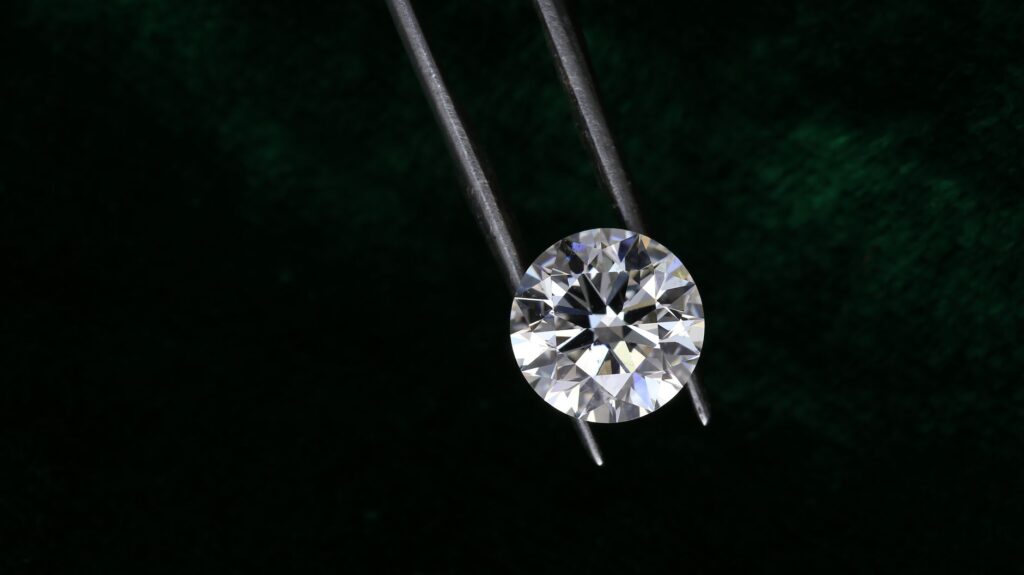
A 1.5 carat diamond often looks larger in photos than it does in strict measurements, yet in real life it is still a noticeably substantial stone. It sits in the range where a diamond usually feels clearly above average, especially in an engagement ring, but it is not so large that every 1.5 carat diamond will look dramatic on every hand. The details that shape its appearance matter almost as much as the carat number itself.
That is why the question what does a 1.5 carat diamond look like does not have a one-line answer. A well-cut round 1.5 carat diamond may face up around 7.3 to 7.5 mm wide, while a deep-cut stone can look smaller and an elongated shape can look larger. Finger size, setting design, and shape all change how big the diamond appears once it is actually worn.
Quick Answer
A 1.5 carat diamond usually looks noticeably larger than a 1 carat diamond and offers a strong balance between presence and wearability. In a round shape, it commonly measures about 7.3 to 7.5 mm in diameter. On smaller fingers, it can look bold and prominent. On larger fingers, it still looks substantial but may appear more moderate.
In practical terms, a 1.5 carat diamond is often seen as a “sweet spot” size because it provides a meaningful visual upgrade from 1 carat without entering the much higher price territory of 2 carats. That said, two 1.5 carat diamonds can look different if their cut proportions, shape, and setting are different.
Understanding the Carat Concept
What diamond carat actually means
Carat is a unit of weight, not a direct measurement of visible size. One carat equals 0.2 grams, so a 1.5 carat diamond weighs 0.3 grams. That number tells you the diamond’s mass, but it does not tell you exactly how wide it looks from the top.
This is an important distinction because shoppers often assume carat and visible size are the same thing. They are related, but they are not identical. Two diamonds can both weigh 1.5 carats and still look meaningfully different once set in a ring.
What face-up size means
Face-up size refers to how large the diamond looks when viewed from above, which is how it is usually seen in a ring. This is the dimension that matters most if your goal is visual size.
For a round diamond, face-up size is usually described by its diameter in millimeters. For fancy shapes such as oval, pear, emerald, and marquise, it is usually described by length and width. These measurements give you a much better idea of what the diamond will actually look like than carat weight alone.
Why millimeter measurements matter so much
A buyer comparing 1.4, 1.5, and 1.6 carat diamonds may see only small differences in the carat numbers, but the visible size difference depends on actual dimensions. A 1.5 carat round that measures 7.45 mm can look more appealing than another 1.5 carat round that measures 7.20 mm if the smaller-looking stone carries too much of its weight in depth.
That is why experienced buyers do not stop at carat weight. They also examine measurements, cut quality, and proportions to understand how the diamond will face up.
What Buyers Usually Expect From a 1.5 Carat Diamond
Expecting it to look 50 percent bigger than 1 carat
This is one of the most common misunderstandings. A 1.5 carat diamond weighs 50 percent more than a 1 carat diamond, but it does not look 50 percent wider. Visible size increases more slowly than weight because diamonds are three-dimensional.
For example, a well-cut round 1 carat diamond often measures around 6.4 to 6.5 mm. A well-cut round 1.5 carat diamond often measures around 7.3 to 7.5 mm. That increase is easy to notice, but it is not a dramatic leap in width the way the carat number alone might suggest.
Assuming every 1.5 carat diamond looks large
A 1.5 carat diamond generally has strong presence, but whether it looks “large” depends on context. On a size 4 finger, a 1.5 carat round may look bold. On a size 8 finger, the same stone can appear more balanced and less oversized.
Personal expectations also matter. Someone who has mostly seen 0.75 to 1.0 carat diamonds may view 1.5 carats as large. Someone comparing it to 2 or 3 carat diamonds may see it as a medium-large size.
Believing shape does not matter much
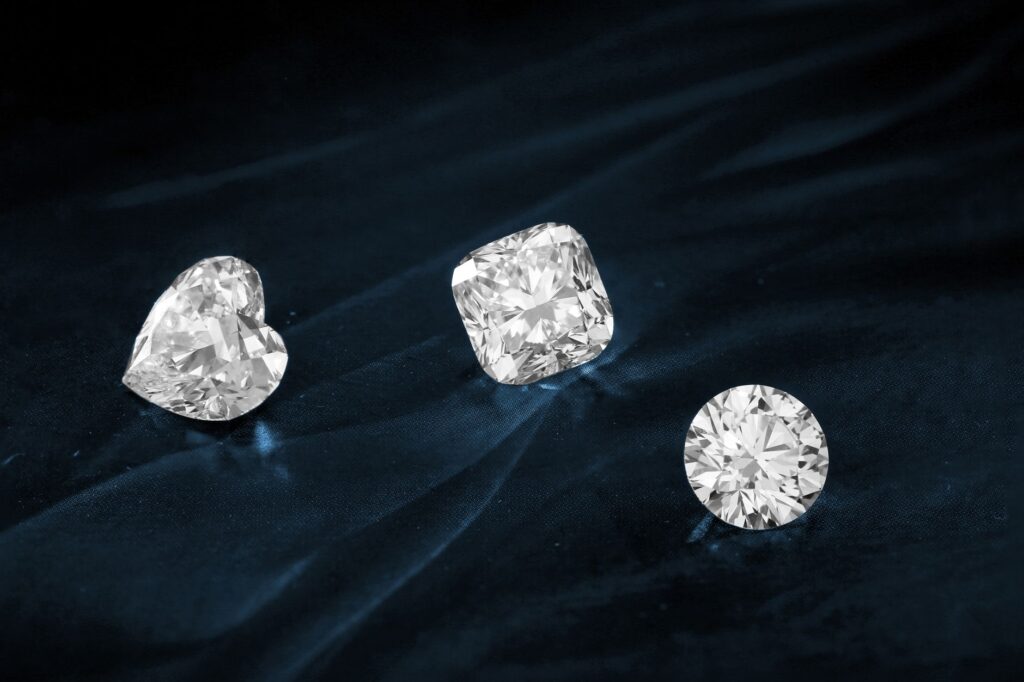
Shape has a major effect on how a 1.5 carat diamond looks. A 1.5 carat oval, marquise, or pear usually appears larger than a 1.5 carat round because elongated shapes tend to spread their weight over a larger face-up area. A princess or cushion may look a bit smaller face-up than a round of the same weight.
This is why a carat number alone never tells the full story.
What a 1.5 Carat Diamond Actually Looks Like
Typical face-up size by shape
Below are approximate face-up measurements for well-cut 1.5 carat diamonds. Exact dimensions vary based on cut proportions and certification standards.
| Shape | Typical Face-Up Measurements | Visual Impression |
|---|---|---|
| Round | About 7.3 to 7.5 mm diameter | Balanced, classic, bright sparkle |
| Oval | About 9.0 x 6.5 mm to 9.3 x 6.8 mm | Looks larger and more elongated |
| Cushion | About 6.8 x 6.8 mm to 7.2 x 7.2 mm | Softer outline, often smaller face-up than round |
| Princess | About 6.4 x 6.4 mm to 6.8 x 6.8 mm | Sharp square look, compact face-up size |
| Emerald | About 8.0 x 6.0 mm to 8.5 x 6.3 mm | Elegant, larger outline, less splintery sparkle |
| Pear | About 9.2 x 6.1 mm to 9.6 x 6.5 mm | Elongated, often appears larger than round |
| Marquise | About 10.5 x 5.3 mm to 11.0 x 5.8 mm | Longest look for the weight, strong finger coverage |
| Radiant | About 7.4 x 5.8 mm to 7.8 x 6.2 mm | Bright, rectangular or square, good visual spread |
How a 1.5 carat round diamond looks on the hand
A round 1.5 carat diamond generally has a visible and balanced presence. It is large enough to be noticed immediately, but it usually remains practical for daily wear. It tends to look refined rather than extreme, especially in solitaire or simple pavé settings.
On smaller hands, it can dominate the ring visually. On medium finger sizes, it usually looks substantial and classic. On larger fingers, it still has presence but may not appear oversized.
Finger coverage and overall impression
Finger coverage refers to how much of the top of the finger the diamond appears to occupy. This is one of the biggest reasons why the same 1.5 carat stone can look very different from person to person.
For example, a 7.4 mm round diamond on a size 4 finger can look broad and eye-catching. On a size 7.5 finger, that same stone may look elegant but more moderate. The diamond has not changed, but the surrounding visual scale has.
Real-World Size Examples
1.5 carat round on a size 4 finger
On a size 4 finger, a round 1.5 carat diamond often looks quite prominent. There is less finger width around the stone, so the diamond takes up more visual space. In a solitaire setting, it may look bold without feeling oversized. In a halo, it can look especially large.
1.5 carat round on a size 6 finger
On a size 6 finger, which is a common engagement ring size, a 1.5 carat round usually looks substantial and balanced. It is often the size at which buyers feel they are getting a distinctly noticeable diamond without moving into a very large-stone aesthetic.
This is one reason 1.5 carats is often viewed as a practical upgrade point from 1 carat.
1.5 carat round on a size 8 finger
On a size 8 finger, a 1.5 carat round still has good presence, but it may not look as large as some buyers expect from the carat number alone. This does not mean it looks small. It usually looks well-proportioned and attractive, but finger width makes the visual effect more moderate.
1.5 carat oval compared with 1.5 carat round
A 1.5 carat oval typically looks larger than a 1.5 carat round because it is longer and covers more finger length. Buyers who want a larger visual appearance without jumping to a higher carat weight often consider oval, pear, or marquise shapes for this reason.
The trade-off is that shape changes style. A round remains the standard for symmetrical brilliance and balanced proportions, while an oval offers a longer, more elongated look.
1.5 carat compared with 1 carat
The difference between 1 carat and 1.5 carats is noticeable. A 1.5 carat diamond looks larger, more substantial, and often more luxurious in person. However, it is not a doubling of visual impact. The jump is meaningful, but it is still a refinement rather than a transformation.
Buyers deciding between these two sizes should think carefully about budget and expectations. In many cases, the 1.5 carat size delivers a satisfying visual upgrade, but it usually comes at a significant price increase in natural diamonds.
1.5 carat compared with 2 carats
A 2 carat diamond is visibly larger than a 1.5 carat diamond, but again, not in direct proportion to weight. For round diamonds, a well-cut 2 carat may measure around 8.1 mm, compared with roughly 7.4 mm for a 1.5 carat. That difference is noticeable, especially side by side.
Still, the price gap can be much larger than the size gap, particularly in natural diamonds. This is where value analysis becomes important.
Factors That Change How Large a 1.5 Carat Diamond Appears
Shape
Shape is one of the strongest influences on apparent size. Elongated shapes, such as oval, pear, and marquise, often look larger than round diamonds of the same carat weight. Square and deeper shapes, such as cushion and princess, may look smaller face-up.
If visible size is a top priority, shape should be one of the first things you evaluate, not just an afterthought.
Cut quality
Cut is how well a diamond’s proportions and facet arrangement work together. It affects sparkle, brightness, and face-up size. A well-cut diamond generally balances light performance and spread more effectively than a poorly cut stone.
A deep-cut 1.5 carat diamond can hide too much weight below the girdle, which means it may look smaller from above. A very shallow stone may look larger but can lose brightness or appear watery if cut poorly. Good cut quality is about balance, not just maximum spread.
Depth and proportions
Depth percentage tells you how tall the diamond is relative to its width. Table percentage tells you how wide the top facet is. These numbers help explain why two diamonds with the same carat weight can face up differently.
In round diamonds, a stone with excess depth may carry hidden weight where you cannot easily see it. This often makes it look smaller for the carat. The buyer pays for 1.5 carats but may get a visible size closer to a lighter stone.
Setting style
Setting design can make a major visual difference. A thin solitaire band often makes the center stone look larger because there is less metal competing for attention. A halo setting surrounds the center stone with smaller diamonds, increasing the overall visual footprint.
Bezel settings can look slightly more compact because the metal border defines the outer edge. Three-stone settings can make the ring feel larger overall, even if the center remains 1.5 carats.
Band width
A wide band can visually reduce the apparent size of the center diamond. A slim band can make the same stone stand out more. This is especially noticeable in the 1 to 2 carat range.
Buyers focused on maximizing the look of a 1.5 carat diamond often prefer a narrower band, though durability and comfort should also be considered.
Finger size and hand proportions
The same 1.5 carat diamond does not look identical on every hand. Smaller ring sizes make diamonds appear larger because the stone covers more of the finger’s width. Longer fingers can also make elongated shapes look especially elegant.
This is why online photos can be misleading if they do not specify finger size.
Color and clarity characteristics
Color and clarity do not usually change physical size, but they can affect overall visual impression. A bright, lively, eye-clean diamond often attracts more attention and may seem more impressive than a larger-looking stone with weaker performance.
For shapes with large open facets, such as emerald and Asscher cuts, clarity becomes especially visible. For rounds and many brilliant cuts, sparkle can help mask minor inclusions and draw attention to the stone’s brightness instead.
What Does a 1.5 Carat Diamond Look Like in Lab Grown vs Natural?
Visually, a lab grown 1.5 carat diamond and a natural 1.5 carat diamond can look the same if they have similar cut, color, clarity, and proportions. Carat weight and millimeter spread matter the same way in both categories.
The main difference for most buyers is budget. Lab grown diamonds often make a 1.5 carat size much more accessible than natural diamonds. That can change the decision from “Can I afford 1.5 carats?” to “Should I stay at 1.5 or go larger?”
How lab grown changes size decisions
With a natural diamond budget, a buyer might need to choose between 1.0 and 1.5 carats. With a lab grown budget, that same buyer may be able to comfortably reach 1.5 carats or even 2 carats while maintaining strong color and clarity grades.
This creates a practical advantage for buyers who care more about visible size than rarity. The trade-off is that lab grown diamonds generally have weaker resale value, so the decision should be based on wearing enjoyment and budget priorities rather than investment expectations.
Price vs Visual Benefit
Why price rises faster than visible size
Diamond prices do not increase in a straight line with visible size. As carat weight rises, especially past popular thresholds such as 1.0, 1.5, and 2.0 carats, prices often jump more sharply than the eye would expect.
This means the move from 1.0 to 1.5 carats can be expensive relative to the visual gain. The move from 1.5 to 2.0 carats can be even more dramatic in cost, especially for natural diamonds with strong cut, color, and clarity.
Is 1.5 carats worth the upgrade from 1 carat?
For many buyers, yes. The visual difference between 1 and 1.5 carats is noticeable enough that it often feels like a meaningful upgrade in everyday wear. A 1.5 carat diamond tends to have more presence and finger coverage without looking excessively large.
Whether it is worth the extra money depends on your budget and your priorities. If size matters a lot to you, 1.5 carats is often a satisfying jump. If value efficiency matters more, a well-cut diamond just under that weight can make more financial sense.
Diminishing returns at higher sizes
The larger the diamond gets, the more expensive each visual increase tends to become. Buyers often experience diminishing returns, which means they pay substantially more for smaller and smaller visible gains.
A carefully chosen 1.4 or 1.45 carat diamond may look extremely close to a 1.5 carat diamond while costing less, especially if the measurements are strong and the cut is excellent.
Who Should Consider Sizing Up to 1.5 Carats or More
- Buyers who find 1 carat slightly too modest. A 1.5 carat diamond provides a clearly larger look without entering very high-size territory.
- Those with larger fingers. More finger width can make smaller carat weights look less prominent, so 1.5 carats may create a more balanced appearance.
- Buyers choosing simple settings. In a plain solitaire, the center stone carries the full visual effect, so more carat weight can have greater impact.
- Lab grown diamond buyers focused on size value. If your budget allows a well-cut 1.5 carat lab grown diamond comfortably, the visual return can be strong.
- Those who plan to keep the ring design minimal. Without a halo or large side stones, center stone size matters more.
Who Can Save Money Without Sacrificing Much Visual Impact
- Buyers open to slightly below 1.5 carats. A 1.40 to 1.49 carat diamond can look extremely similar to 1.5 carats if cut well.
- Those choosing elongated shapes. A 1.3 to 1.4 carat oval or marquise may give a face-up look comparable to or larger than a 1.5 carat round.
- People with smaller fingers. On a small hand, even a 1.2 to 1.4 carat diamond can look quite substantial.
- Buyers using halo settings. A halo can dramatically increase perceived size, reducing the need to pay for additional center stone weight.
- Anyone prioritizing cut quality over carat number. A beautiful, well-cut slightly smaller diamond often looks more impressive than a dull, deep 1.5 carat stone.
Common Buyer Mistakes With 1.5 Carat Diamonds
Chasing the carat number instead of the measurements
A 1.5 carat label can be appealing, but the actual millimeter dimensions tell you more about size appearance. Always compare carat weight with face-up spread.
Ignoring cut quality
Cut affects both sparkle and apparent size. A poorly cut diamond may technically weigh 1.5 carats but fail to look lively or appropriately sized. This is one of the costliest mistakes because it affects what you see every day.
Paying a premium for a “magic size” without checking near-size alternatives
Certain benchmark weights, including 1.5 carats, can command premiums because demand is strong. A well-cut diamond just under the threshold may offer better value with little visible sacrifice.
Not considering shape-related spread
A buyer who wants the largest possible look may automatically choose round because it is the most familiar shape. In reality, an oval, pear, or marquise may offer more visible size for the same weight.
Choosing a band that makes the center look smaller
A very wide band can reduce the apparent size of the center stone. This does not mean wide bands are wrong, but the design should be chosen with visual balance in mind.
Assuming online hand photos are universally accurate
Hand shots can be useful, but they are heavily influenced by camera distance, finger size, cropping, lighting, and setting style. A stone can look larger in close-up images than it will in person.
How to Judge a 1.5 Carat Diamond More Accurately
Check the millimeter dimensions first
For a round 1.5 carat diamond, expect roughly 7.3 to 7.5 mm if it is proportioned well. If the measurement is meaningfully smaller, ask why. The stone may be cut too deep.
Compare shape and spread together
If you are looking at fancy shapes, compare both length and width. A longer oval may look larger, but if it is too narrow, it can also appear less balanced. Spread should be evaluated alongside symmetry and overall style.
Think about the finished ring, not just the loose stone
The setting can amplify or reduce the stone’s visual impact. A 1.5 carat diamond in a slim solitaire can look very different from the same diamond in a thick bezel setting. Always evaluate the full design.
Use your finger size as part of the decision
Visible size should be judged in context. A measurement that seems average on one hand can look very large on another. This is especially important if you are comparing online examples.
Comparison Table: What a 1.5 Carat Diamond Usually Looks Like
| Category | Typical 1.5 Carat Expectation | What It Means for Buyers |
|---|---|---|
| Round diameter | About 7.3 to 7.5 mm | Noticeably larger than 1 carat, but not dramatically so |
| Visual presence | Substantial and above average | Often feels like a strong center stone size |
| Finger coverage on small hands | Bold | Can look quite large even in a simple setting |
| Finger coverage on medium hands | Balanced and prominent | Often a popular sweet spot |
| Finger coverage on larger hands | Moderate to substantial | Still noticeable, but may not feel oversized |
| Price efficiency | Moderate | Visual gain is good, but pricing rises sharply in natural diamonds |
| Lab grown accessibility | Often strong | Can make 1.5 carats easier to reach within budget |
Frequently Asked Questions
Is a 1.5 carat diamond considered big?
A 1.5 carat diamond is generally considered a substantial size, especially for an engagement ring. Whether it feels “big” depends on finger size, shape, and what the buyer is used to seeing. In most everyday settings, it is clearly noticeable and above average.
How many millimeters is a 1.5 carat diamond?
A well-cut round 1.5 carat diamond is usually about 7.3 to 7.5 mm in diameter. Other shapes vary. For example, a 1.5 carat oval may be around 9.0 x 6.5 mm, while a cushion may face up closer to 7.0 x 7.0 mm.
Does a 1.5 carat diamond look much bigger than 1 carat?
Yes, it usually looks noticeably bigger, but not massively bigger. The increase in visual size is meaningful, especially on the hand, yet it is smaller than the jump in carat weight might suggest.
Will a 1.5 carat diamond look too big for everyday wear?
For most people, no. A 1.5 carat diamond is still very wearable for daily use, especially in a practical setting. Lifestyle, hand size, and personal style preferences all matter, but this size is generally considered comfortable and versatile.
Which 1.5 carat diamond shape looks the largest?
Marquise often looks the largest for its weight because of its elongated shape and strong finger coverage. Oval and pear also tend to look larger than round. Round remains popular for its balanced appearance and classic sparkle, even though it may not maximize spread.
Can a 1.5 carat diamond look small?
Yes, under certain conditions. It can look smaller than expected if it is cut too deep, set in a design with a wide band, or worn on a larger finger. A compact shape such as a deep cushion may also face up smaller than an elongated shape of the same weight.
Is a 1.5 carat lab grown diamond a good option for size?
It can be a very practical option for buyers who want strong visual size within budget. Lab grown diamonds often allow buyers to reach 1.5 carats more comfortably while keeping good cut, color, and clarity. The main trade-off is lower resale value compared with natural diamonds.
Should I buy exactly 1.5 carats or slightly under?
It depends on pricing and measurements. A diamond slightly under 1.5 carats can offer excellent value if it faces up similarly and has strong cut quality. Buyers often save money this way without giving up much visible size.
Conclusion
A 1.5 carat diamond usually looks substantial, refined, and clearly larger than a 1 carat diamond. In round form, it often measures about 7.3 to 7.5 mm across, which gives it a strong presence without automatically looking oversized. On smaller fingers it may appear bold, while on larger fingers it often looks balanced and elegant.
The most important takeaway is that carat weight alone does not tell you exactly what a diamond will look like. Shape, cut quality, depth, setting style, and finger size all affect visible size. Two diamonds with the same 1.5 carat weight can create very different impressions once worn.
For buyers trying to decide whether 1.5 carats is the right choice, the smartest approach is to look beyond the headline number. Compare millimeter measurements, evaluate the cut carefully, think about the setting, and consider whether a slightly smaller or differently shaped diamond could deliver a similar look for less money. That is usually how the best size decisions are made.