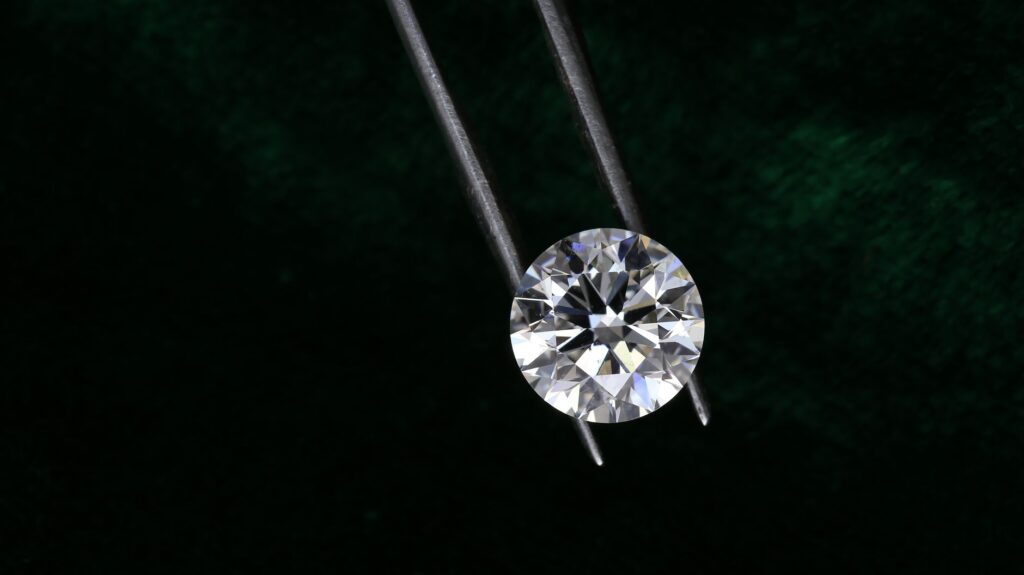
Clarity is one of those diamond topics that sounds more technical than it usually is in everyday buying. A VS2 diamond may have small inclusions on paper, but what most shoppers really want to know is much simpler: will it look clean once it is set, worn, and viewed under normal lighting?
That question matters even more today because buyers often compare lab grown diamonds, natural diamonds, and different shapes side by side online. VS2 sits in a useful middle ground for many of those comparisons. It can offer a clean-looking diamond without the higher prices attached to VVS or flawless grades, but the stone still needs to be judged individually.
The most helpful way to understand VS2 is not as a label, but as a practical buying category. Some VS2 diamonds are extremely easy to wear with confidence. Others have inclusion patterns that deserve a closer look. The difference is not the grade alone, but how that grade translates into real-world appearance.
Quick Answer
VS2 means Very Slightly Included 2. It is a diamond clarity grade that usually indicates minor inclusions visible under 10x magnification, but often difficult or impossible to see with the naked eye in normal viewing conditions.
In practical terms, many VS2 diamonds are eye-clean, meaning they do not show obvious flaws when worn. That said, VS2 is not a guarantee. The type of inclusion, where it sits, the diamond shape, and the cut all influence how the diamond actually looks.
For many buyers, VS2 is a strong balance of appearance and value. It often provides a visually clean diamond without the premium of VVS or flawless clarity, which is why it is so commonly considered in engagement ring shopping and lab grown diamond comparisons.
What Is VS2 Diamond Clarity?
What the grade means
VS2 is part of the standard diamond clarity scale. That scale runs from flawless at the top through internally flawless, VVS, VS, SI, and lower grades where inclusions become easier to notice. VS2 is the lower end of the Very Slightly Included range, sitting below VS1 and above SI1.
In plain English, a VS2 diamond has small internal characteristics or surface features that a trained grader can identify under magnification. These are real inclusions, but they are usually minor enough that most buyers will not spot them during ordinary wear.
The key point is that VS2 describes what is visible to a grader under controlled conditions. It does not automatically tell you how the diamond will look in a ring, under room lighting, or from a normal conversation distance. That is why the individual stone matters so much.
Where VS2 sits on the clarity scale
VS2 is often viewed as a practical middle ground. It is not as rare or expensive as VVS or IF, but it is generally cleaner than many SI diamonds. For buyers who want a diamond that looks clean without chasing top-tier clarity, VS2 is often a sensible place to focus.
| Clarity Grade | General Meaning | What Buyers Usually See | Practical Buying Takeaway |
|---|---|---|---|
| FL / IF | Flawless or internally flawless | No internal inclusions seen under magnification, or none at all | Top clarity, but often more than most buyers need |
| VVS1 / VVS2 | Very, very slight inclusions | Extremely hard to see even with magnification | High clarity with a noticeable price premium |
| VS1 / VS2 | Very slight inclusions | Often eye-clean, depending on inclusion type and location | Common sweet spot for value and visual appearance |
| SI1 / SI2 | Slight inclusions | May be eye-clean or visibly included | Requires more careful review of the actual stone |
VS2 is not a promise of perfection. It is a signal that the inclusions are generally minor. For a buyer, that usually means the stone has a good chance of looking clean in real life, but it still deserves inspection.
Why VS2 Matters When Buying a Diamond
It affects what you can actually see
Diamond clarity matters because inclusions can change how a stone looks. Some are so tiny that they have no practical effect. Others are visible enough to catch the eye, especially if they sit near the center or create a hazy patch.
VS2 matters because it is close to the point where many diamonds still appear very clean in everyday wear. That means a buyer may be able to save money compared with higher clarity grades without sacrificing the appearance they actually want.
It can affect value more than first-time buyers expect
Clarity grades can influence price significantly, but the visible difference is not always dramatic. Moving from VS2 to VVS, for example, may raise the price even when the real-world appearance changes very little for most people.
This is one reason experienced shoppers often focus on eye-clean appearance and overall balance rather than chasing the highest clarity grade. If the inclusions are not visible, the value of upgrading may be limited.
It matters in both natural and lab grown diamonds
Clarity is important in lab grown diamonds as well as natural diamonds. In lab grown stones, buyers sometimes expect clarity to be very high because the prices can be lower than natural diamonds of similar appearance. That can lead to overpaying for a grade that does not change how the diamond looks.
Lab grown diamonds can still have inclusions, growth patterns, clouds, or twinning wisps. The same practical question applies: does the diamond look clean, and does it look transparent and lively in normal viewing conditions?
How VS2 Affects Appearance
What a VS2 diamond may show
A VS2 diamond may contain tiny crystals, feathers, pinpoints, clouds, needles, or twinning wisps. These are all common inclusion types that grading laboratories identify under magnification.
Most of the time, these inclusions are not obvious without close inspection. In a ring, a VS2 diamond often looks clean face-up, which is the main view buyers care about. That is especially true when the diamond is well cut.
Eye-clean matters more than the label alone
The term eye-clean means the diamond does not show obvious inclusions to the unaided eye in normal viewing conditions. VS2 diamonds are often eye-clean, but not always. A centered dark crystal, a noticeable cloud, or a surface-reaching feature can still be visible in some stones.
That is why two VS2 diamonds can look very different. A clarity grade describes a range, not an exact appearance guarantee. The actual stone determines whether the diamond feels clean in real life.
Face-up view versus close inspection
When a diamond is worn in a ring, it is usually seen from arm’s length or conversational distance. At that distance, many VS2 diamonds look clean, especially in round brilliant cuts and other shapes that return a lot of sparkle.
Close inspection is different. If you hold the stone very near your face, use a loupe, or compare it side by side with a higher clarity diamond, you may notice more detail. That does not mean the VS2 looks bad. It means the grading system is working as intended.
Cut quality can make a VS2 look cleaner
Cut has a major effect on how noticeable inclusions are. A well-cut diamond reflects light in a way that creates brightness and scintillation, which can help draw attention away from small internal features.
That is why a strong cut is often one of the best ways to improve the visible beauty of a VS2 diamond. A poorly cut stone can make small inclusions seem more obvious, while a better-cut stone can make them harder to notice.
What Types of Inclusions Can Appear in VS2 Diamonds?
Crystal
A crystal is a tiny mineral trapped inside the diamond during formation. It may be white, transparent, or dark. Small crystals are common across many clarity grades, including VS2.
Most tiny crystals do not stand out without magnification. A darker crystal or one placed near the center of the diamond can be more noticeable, especially in step-cut shapes or stones with less sparkle masking the inclusion.
Feather
A feather is a small internal fracture that can resemble a feather shape under magnification. Many feathers are minor and do not affect durability if they are small, isolated, and away from vulnerable areas.
Buyers should pay closer attention if a feather reaches the surface or sits near a corner, edge, or other exposed point. In that case, the issue is not just appearance. It may also be a durability consideration.
Cloud
A cloud is a cluster of tiny pinpoints or inclusions that can create a hazy area. A small cloud is usually not a concern. A larger cloud can reduce transparency and make part of the stone look less crisp or lively.
This matters because not all clarity concerns are about seeing a dot or line. Sometimes the issue is a softer, duller look. If a VS2 diamond appears hazy in photos or video, that deserves attention even if the grade sounds acceptable.
Needle
A needle is a very thin, elongated inclusion. It is often extremely small and frequently invisible without magnification. In many VS2 diamonds, needles are little more than a grading detail.
Needles are usually not a concern unless there are enough of them to affect transparency, which is less common in well-selected stones.
Pinpoint
Pinpoints are very small dot-like inclusions. One or two pinpoints usually have no practical effect, and even a small cluster may not be visible to the naked eye.
For most buyers, pinpoints are among the least concerning inclusion types. In a VS2 diamond, they often have little to no impact on everyday appearance.
Twinning wisp
A twinning wisp is a line or pattern created during diamond growth. It can appear as a subtle internal streak or filament under magnification. Twinning wisps are especially common in lab grown diamonds, where the growth process can create distinctive internal patterns.
These features are not automatically a problem, but if they create haziness or a textured look, they can affect how transparent the diamond appears. In those cases, the stone should be judged visually rather than by grade alone.
Knot
A knot is an included crystal that reaches the surface of the diamond. Because it breaks the surface, it may be more visible and can sometimes influence polish or durability.
Knots are less common in better clarity ranges, but they should be reviewed carefully if present. A knot deserves more attention than a typical internal inclusion because it involves the surface of the stone.
Cavity
A cavity is a small opening or indentation in the diamond surface, sometimes created when an included crystal comes out during cutting or wear. It can look like a tiny hole.
Cavities are not always severe, but they are more concerning than simple internal marks because they involve the surface. If a cavity sits near an exposed edge or facet junction, it deserves extra caution.
Chip
A chip is a small missing piece from the diamond surface, usually at the edge or a facet junction. Chips are often more of a practical condition issue than a standard clarity concern, but they can appear in diamond reports if present.
Because chips can affect both appearance and durability, they should be treated seriously. Even a small chip can matter if it is in a visible or vulnerable location.
How VS2 Compares With Other Clarity Grades
VS2 versus VS1
VS1 is one grade higher than VS2. In practical terms, the difference is often small and may only be visible under magnification. Many VS1 and VS2 diamonds both look eye-clean.
For most buyers, the jump from VS2 to VS1 is usually not worth a large premium unless the specific VS2 has a visible inclusion or a less favorable inclusion location. In many cases, the money is better spent on cut quality or carat weight.
VS2 versus SI1
This is one of the most useful comparisons for buyers because SI1 diamonds can vary a lot. Some SI1 stones are eye-clean and look very similar to VS2. Others show obvious inclusions right away.
VS2 usually gives more consistency. If you want a safer choice without going to higher clarity, VS2 is often easier to buy confidently. SI1 can be a strong value, but it requires more individual inspection.
VS2 versus VVS1 and VVS2
VVS diamonds have extremely tiny inclusions that are very difficult to locate even under magnification. They are technically cleaner than VS2, but the difference is often hard to appreciate visually once the diamond is mounted and worn.
For many everyday buyers, the extra cost of VVS does not create a matching visual benefit. That is why some shoppers prefer a well-chosen VS2 and use the budget savings elsewhere, such as for a better cut or larger size.
VS2 versus IF and FL
Internally flawless and flawless diamonds sit at the top of the clarity scale. They are impressive from a grading standpoint and may appeal to collectors or buyers who want the cleanest possible stone.
However, for most consumers, that level of clarity is not necessary to achieve a beautiful-looking diamond. VS2 can satisfy the appearance goal for many engagement rings and everyday pieces at a more accessible price.
How Shape and Cut Affect VS2 Visibility
Some shapes hide inclusions more easily
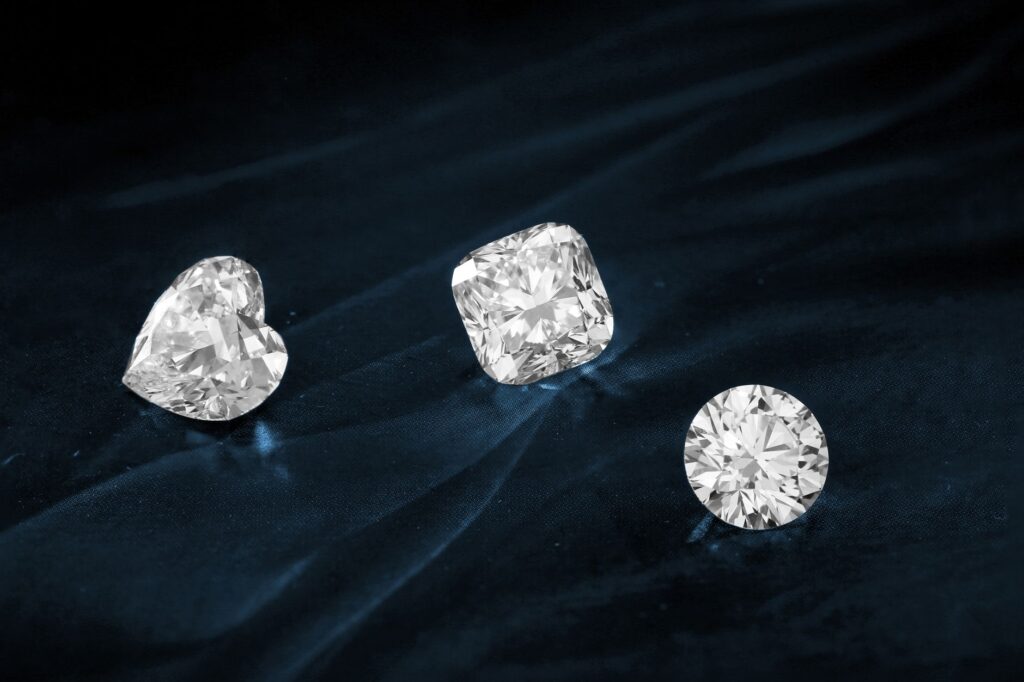
Round brilliant diamonds often disguise small inclusions well because of their intense sparkle. Shapes like oval, cushion, pear, and marquise can also look clean in VS2, but the result depends more heavily on the specific stone.
Step-cut shapes such as emerald cut diamonds are less forgiving. Their broad, open facets make inclusions easier to spot, so a VS2 emerald cut may need more careful review than a VS2 round brilliant.
Cut quality changes what your eye notices
A strong cut creates brightness and scintillation, which can make small inclusions less noticeable. The eye tends to follow light and sparkle first. That is one reason a well-cut VS2 diamond can look more attractive than a higher-clarity stone with a weaker cut.
Cut does not remove inclusions, but it can change how much attention they attract. For buyers, that means clarity should never be judged separately from cut.
How to Evaluate a VS2 Diamond Properly
Look at the inclusion type
VS2 tells you the inclusions are minor, but it does not tell you everything you need to know. A tiny pinpoint and a dark crystal are both possible in VS2, but they have very different practical effects.
Ask what type of inclusion is present and whether it is internal or surface-reaching. That gives you a better sense of whether the diamond will look clean and whether the inclusion has any durability implications.
Check the location carefully
Inclusion location can matter as much as inclusion size. A small mark near the edge may be hidden by prongs or lost in the outer facets. The same inclusion near the center can be easier to notice face-up.
When possible, review the plotted clarity diagram and ask whether the inclusion is visible from the top. That one question often separates a comfortable purchase from a disappointing one.
Use photos and video, not just the report
A grading report is useful, but it is not a full visual preview. Magnified images and video can show whether a diamond appears clean in normal conditions, especially when comparing online listings.
This is especially important for lab grown diamonds, where buyers often see a wide range of sizes and clarity grades at similar price points. The report matters, but the actual visual evidence matters more.
Ask whether the stone is eye-clean
Eye-clean is one of the most helpful buying terms because it addresses the real question buyers care about. If a seller says a VS2 diamond is eye-clean, that is a good sign, but it should still be supported by images, video, or a return policy.
Because eye-clean is not an official grading term, it depends on viewing distance and lighting. A diamond that looks clean from arm’s length may show more detail under closer inspection. That is normal.
Real-World Examples of VS2 Clarity
VS2 versus VS1 in normal wear
Imagine two round diamonds with the same cut, color, and carat weight. One is VS1 and the other is VS2. In everyday wear, most people will not notice a meaningful difference between them.
The VS1 may be cleaner under magnification, but that does not always translate into a visible advantage. For many buyers, the VS2 is the better value if it looks clean and the price is lower.
Eye-clean VS2 versus visible SI1
Now compare an eye-clean VS2 with an SI1 that has a dark inclusion near the center. In that case, the VS2 will usually be the better choice for a buyer who wants a cleaner-looking stone.
This is a good reminder that grade labels alone do not tell the whole story. A visually clean VS2 can be a better purchase than a lower grade that shows obvious flaws.
VVS versus VS2 for everyday wear
A VVS diamond is technically cleaner than a VS2, but the everyday visual difference may be very small. In many cases, the extra clarity is most obvious under magnification, not on the hand.
For buyers focused on practical appearance, that premium may not be necessary. Many would rather direct the budget toward a better cut, a larger center stone, or a more balanced overall diamond.
Lab grown VS2 with a cloud or twinning wisp
Lab grown diamonds sometimes show clouds or growth-related features that affect the way the stone appears, especially if the inclusion creates a slightly hazy look. A VS2 lab grown diamond can still be excellent, but transparency should be checked carefully.
If a diamond seems less lively or less crisp than expected in video, do not ignore that just because the grade looks good. Visual performance matters more than the label.
Advantages of VS2 Clarity
VS2 offers several practical benefits for buyers who want a clean-looking diamond without paying top-tier clarity prices.
- Often eye-clean in normal viewing conditions.
- Usually more affordable than VVS and FL/IF grades.
- Good balance between visible appearance and budget.
- Widely available in both natural and lab grown diamonds.
- Helpful flexibility when balancing cut, color, and carat weight.
One of the biggest advantages of VS2 is that it can keep you from paying for clarity you are unlikely to notice. For many buyers, that is a sensible use of budget.
Disadvantages and Trade-Offs
VS2 is a strong choice in many cases, but it is not automatically the best choice for every diamond or every buyer.
- Not every VS2 diamond is eye-clean, especially if the inclusion is dark or centered.
- Shape matters. Step-cut and elongated shapes can reveal inclusions more easily.
- Inclusion type matters. A feather, cloud, or cavity may deserve more attention than a pinpoint.
- Some buyers prefer higher clarity for peace of mind or grading prestige.
The biggest trade-off is that VS2 is practical, not absolute. It usually works well, but the individual stone still needs to be checked.
Buying Considerations for VS2 Diamonds
Budget
If you want to manage cost without giving up a clean appearance, VS2 is often a smart place to start. It can leave room in the budget for better cut quality, better color, or a slightly larger carat weight.
That is especially useful for buyers who care more about overall beauty than about achieving the highest clarity label.
Eye-clean appearance
If eye-clean appearance is your main priority, VS2 is a strong candidate. Still, do not assume every VS2 diamond will look the same. Ask for confirmation that the specific stone is eye-clean in the type of setting and viewing distance you care about.
This matters even more in a solitaire setting, where the diamond is highly visible and there is little else to draw attention away from the center stone.
Lab grown diamond considerations
Lab grown diamonds can make higher clarity grades more financially accessible, but that does not mean every buyer needs to chase them. A well-selected VS2 lab grown diamond can look excellent and may represent better value than a more expensive VVS stone.
Pay attention to the appearance of the diamond, not just the fact that the price is lower than a natural stone of similar size. A lower price should not tempt you to pay extra for a clarity grade you cannot see.
Inclusion placement
Placement is one of the most important parts of clarity evaluation. A tiny inclusion near the edge can be easy to ignore, while a similar inclusion in the middle of the table area can be more noticeable.
If the report includes a plotting diagram, use it as a guide, not a final answer. The visual review is what matters most.
Long-term satisfaction
Some buyers feel more comfortable with a higher clarity grade simply because it offers peace of mind. Others are satisfied with VS2 as long as the diamond looks clean and the price is sensible. Both approaches can be reasonable.
The best choice is the one that fits your priorities. If you do not expect to inspect the diamond under magnification after purchase, the practical difference between VS2 and a higher grade may be very small.
Common Buyer Mistakes
Overpaying for invisible improvements
One common mistake is paying a large premium for a clarity upgrade that will not change the way the diamond looks in normal wear. Buyers sometimes focus on the grade label instead of the face-up appearance.
If the diamond already looks clean, spending more on a higher clarity grade may not create a meaningful visual benefit.
Ignoring inclusion type and location
Two VS2 diamonds can look very different. One may have a tiny off-center pinpoint, while another may have a dark inclusion near the middle. The grade is the same, but the visual outcome is not.
Always check what the inclusion is and where it sits.
Assuming all VS2 diamonds look identical
Clarity grades are ranges, not exact visual categories. Some VS2 stones look exceptionally clean. Others are still fine, but show a little more evidence under close inspection.
That variation is normal, which is why individual stone review is essential.
Overlooking transparency issues
Clarity is not only about whether an inclusion can be seen. In some diamonds, especially certain lab grown stones, clouds or growth-related features can affect the overall crispness of the stone.
If a diamond looks slightly dull or hazy in images, do not dismiss the issue just because the grade says VS2. Transparency should be part of the evaluation.
Frequently Asked Questions
Is VS2 a good diamond clarity?
Yes, VS2 is generally considered a good clarity grade. It often looks clean to the eye and can offer a strong balance between appearance and price.
Can you see VS2 inclusions without magnification?
Sometimes, but not always. Many VS2 diamonds are eye-clean, while others may show a subtle inclusion depending on the type, size, color, and placement of the inclusion.
Is VS2 better than SI1?
Yes, VS2 is a higher clarity grade than SI1. But that does not mean every VS2 looks better than every SI1. Some SI1 diamonds are eye-clean, while some VS2 diamonds still show a visible inclusion.
Is VS2 worth the price over SI1?
It depends on the individual stones. If the SI1 is not eye-clean, VS2 is often worth the extra cost. If both diamonds look clean in normal viewing, the premium for VS2 may not create much practical benefit.
Does VS2 affect durability?
Usually not in a major way. Most VS2 inclusions are minor internal features. However, surface-reaching inclusions such as feathers near an edge, cavities, knots, or chips deserve extra caution.
Is VS2 a good choice for an engagement ring?
Yes, VS2 is often a very good choice for an engagement ring. It commonly offers a clean appearance in everyday wear without requiring a high premium.
Should I choose VS2 for a lab grown diamond?
Often, yes, if the diamond looks clean and the overall appearance is strong. Lab grown diamonds can make higher clarity grades seem more attainable, but VS2 may still be the most practical balance of beauty and value.
What matters more than VS2 clarity?
For most buyers, cut quality matters more than moving from VS2 to a higher clarity grade. Cut has a bigger effect on sparkle and overall visual appeal, while the difference between VS2 and a higher clarity grade is often subtle.
Conclusion
VS2 diamond clarity is often a practical and attractive choice because it can deliver an eye-clean look without the cost of higher clarity grades. In normal wear, a good VS2 diamond may appear very clean, especially when the cut is strong and the inclusion is minor or well placed.
The most important thing to remember is that clarity grades are only part of the story. The inclusion type, its location, the diamond shape, and the stone’s transparency all influence what you actually see. A carefully selected VS2 can offer excellent value, but it should still be evaluated as an individual diamond.
If you are comparing diamonds, focus on the view you will have in real life, not just the number on the report. That approach usually leads to a smarter, more satisfying buying decision.